Loading the archive.
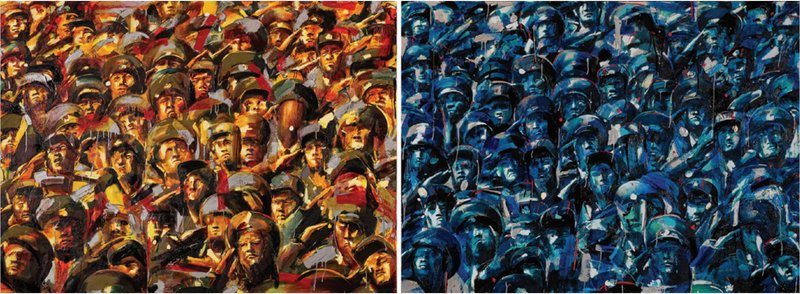
2021 | Right and Left Chorus
130 × 360cm
Loading the archive.
Group Show
24 Dec, 2021 - 9 Jan, 2022
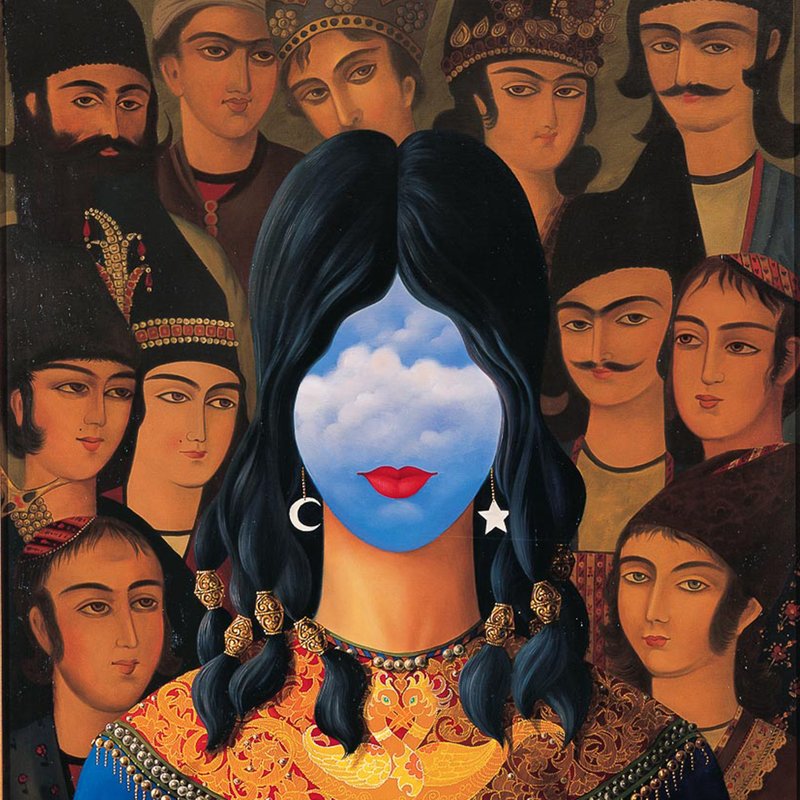
“Factory” is a series of group shows dedicated to the less-seen artworks of a selected number of Mohsen Gallery artists that are either in-progress or have been missed from the view of the audience in Iran, as they were represented only in art fairs and international exhibitions.
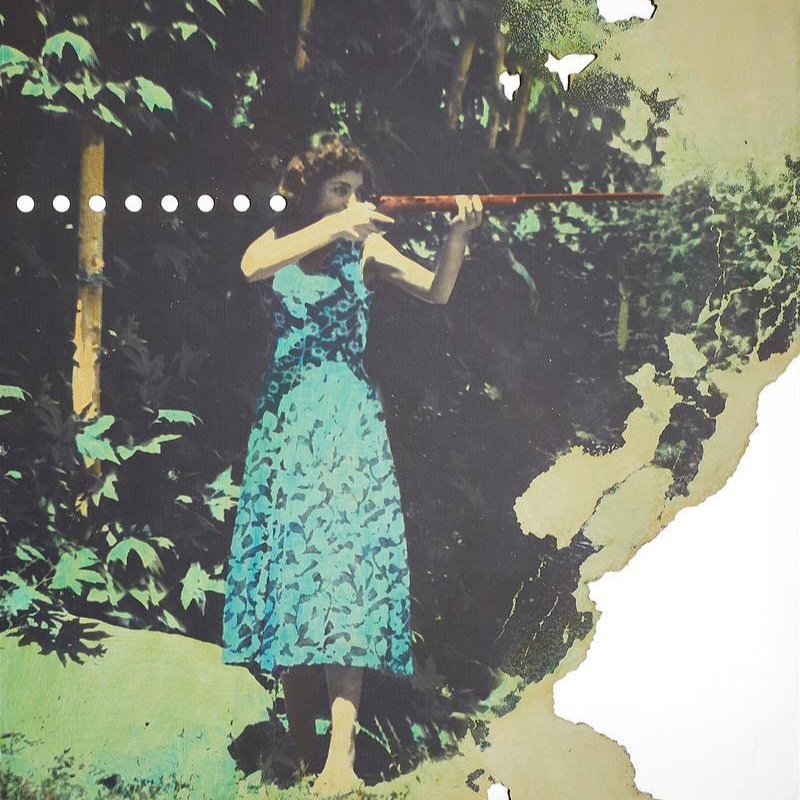
In his new series, “A Little While,” Sasan Abri evokes memories and photographs by a printing process that is reminiscent of drawing, as if a piece of people’s character has been lost between the lines of time. With insistence on the experience of making unique editions and undermining the idea of photographic reproduction in Sasan’s recent works, his presence has become more personal and intimate.
By removing human figures from his “Fidelity Series (Part 3),” for the first time in his practice, Amirhossein Bayani makes implicit references to politics, power, and their relationships to the daily life, which makes the series more abstract and intentional than the artist’s earlier works.
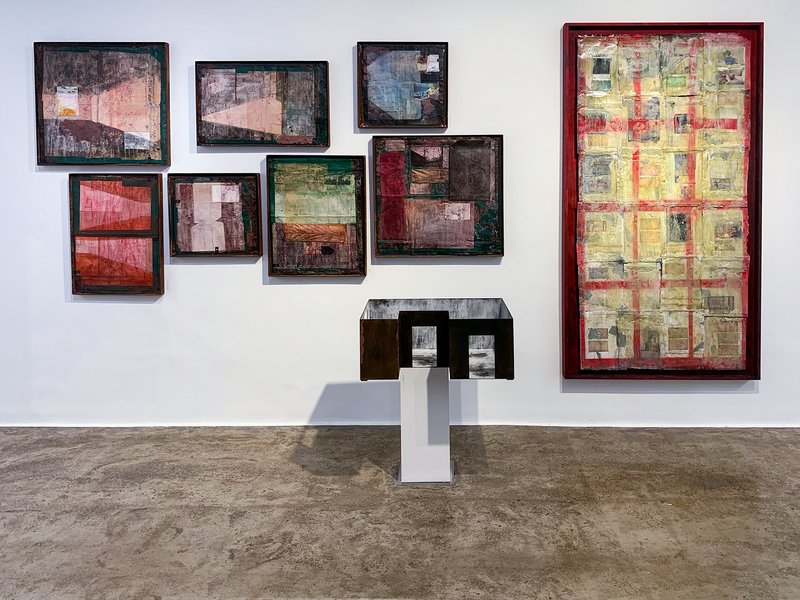
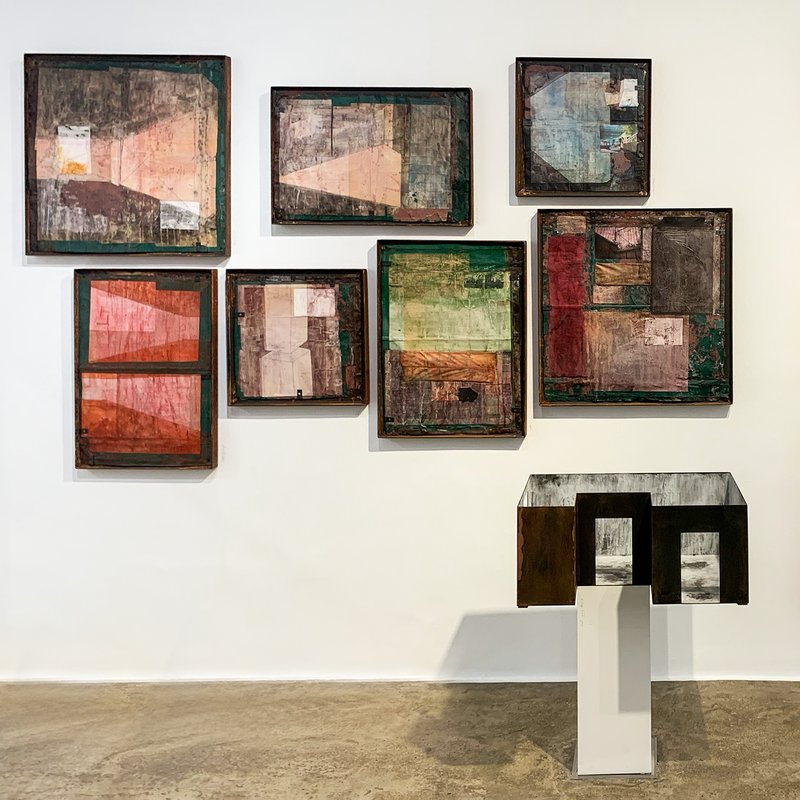
Majid Biglari tends to conceal his visual codes from the audience, encouraging them to go through a rather demanding process to make sense of it all. In “Soot, Fog, Soil,” he has assumed a similar approach, as if by sealing old immigration documents of a family on tin cans and the imaginary maps of a fictional haven, he seeks to present his audience with new questions.
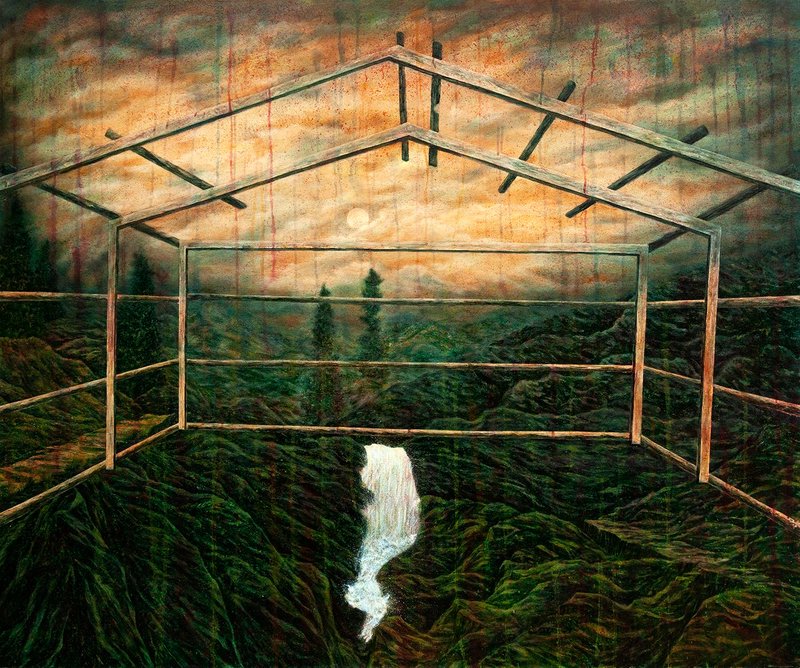
In Milad Jahangiri’s “Gods; Under Construction,” gods are not meant as creators, but are depicted as creatures in a place where there is no human presence; which is, nothing more than a deceptive beauty. The fate of these creatures ends in a tragic contradiction, as they move further away from liberating joy through countless reproductions. With a similar approach in his “Bitter Days” series, he portrays collective, eternal mourning, from which there seems to be no escape.
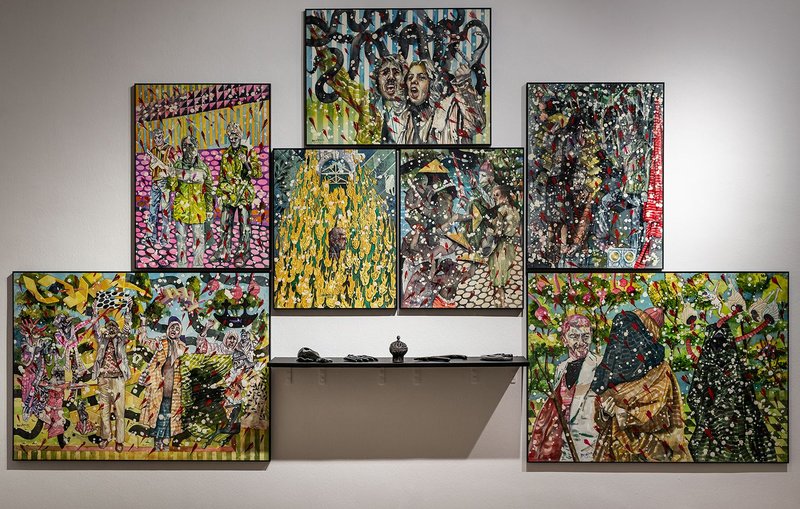
In “Applaud,” Amir-Hossein Zanjani represents dis-figures that are unrelated, while they are simultaneously entangled. Similar to his previous series, Zanjani uses bold colors to explore sociohistorical issues and contemporary militarism in the midst of a multitude of lonely bodies, whose identities have been destroyed and sunk into the background.
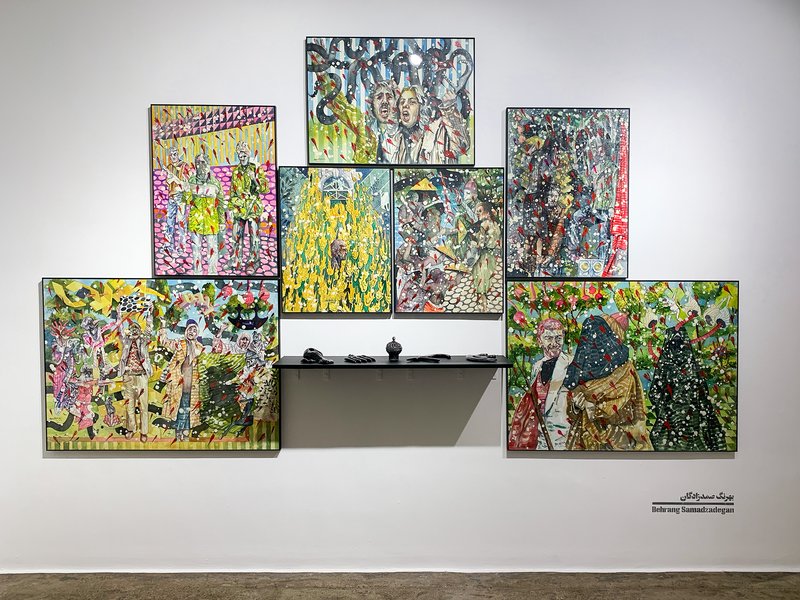
Behrang Samadzadegan’s “Lovers in the Dark” installation seeks to construct a narrative that seems to have been overlooked until now. The vibrant watercolors and the monotonous, isolated, surviving ceramic monuments, have all turned into a satiric representation for lovers, who are doomed to be separated as a result of great sociopolitical transformations.
In “AGNOSIA,” we see a visual representation of Ali Phi’s biological data as abstract images that work as “electroencephalographics” for him. In this project, he explores the relationship between change in habitats and the reconfiguration of old memories and its adaption with the new environment.
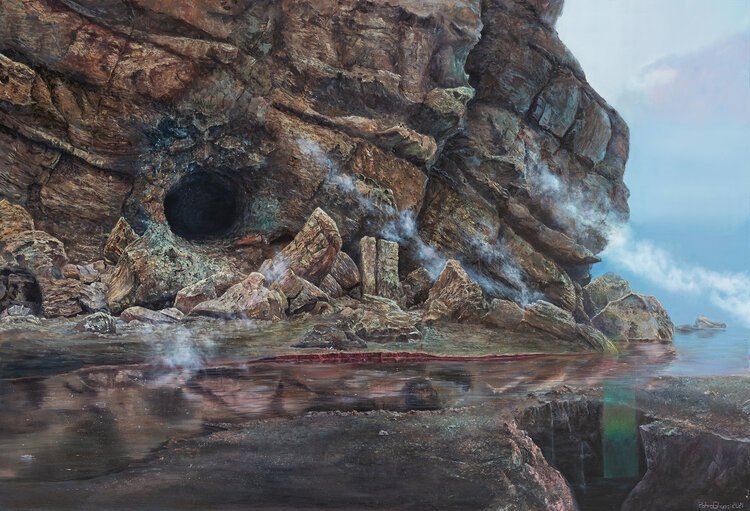
In “Venus; Where the Sun Rises in the West and Sets in the East,” Zahra Ghyasi continues the same approach of examining the disintegrations of reality. This time, however, she throws herself to a fantastic planet to go on in her imaginary adventure and instead of her usual literal-historical references, she seeks refuge in her subconscious.
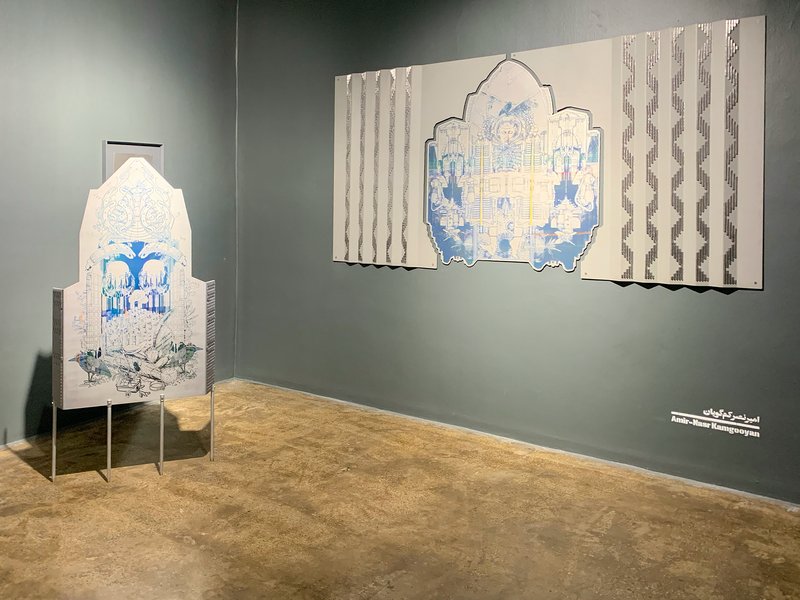
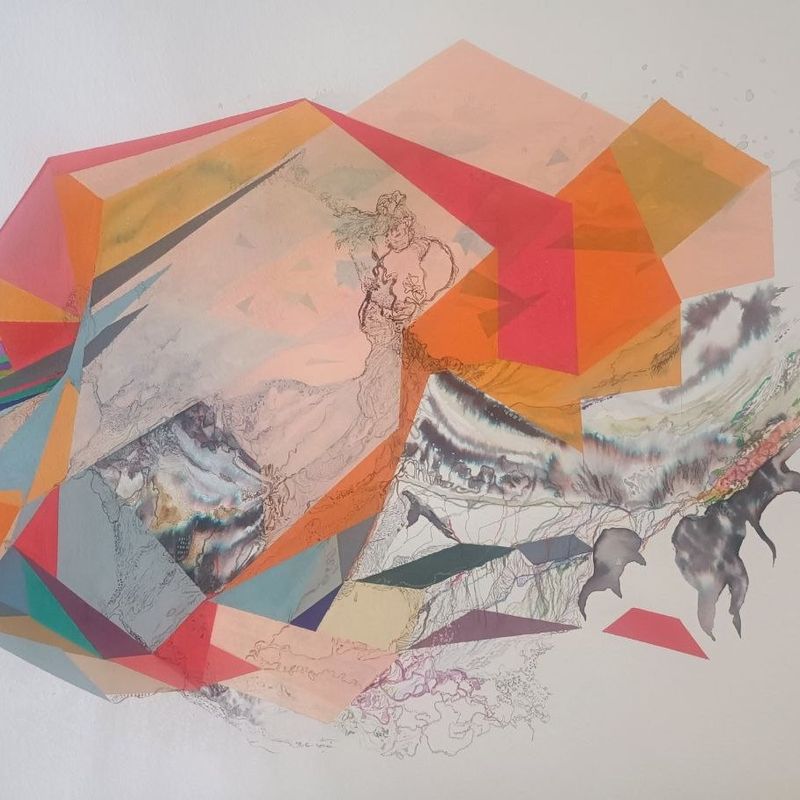
In his new, on-going project, Amir-Nasr Kamgooyan depicts organic and inorganic forms, without locating the elements in particular temporal or spatial contexts. While they seem to contradict, these elements are consistently unified. In symmetrical asymmetry, he unravels the border between the elements in a multidimensional situation. Formally, these works seem like two-dimensional statues of his engineered drawings.
In his “Yazashn” series, Hosein Mohamadi has made more or less abstract works, ironically, seem realistic. With a new approach to Persian mythology and using the concept of four-fold compositions, the artist reminds the Iranians of the ancient and fundamental concepts in Iranian culture.
With his ironic approach, Seyed Mohamad Mosavat plays with linguistic and visual concepts in his “The Shit and Nightingale” series, such that the meaning is inevitably rearranged the mind of the audience. With his familiar brushstrokes, he draws words out of their “comfort zones” to assign new roles to them.
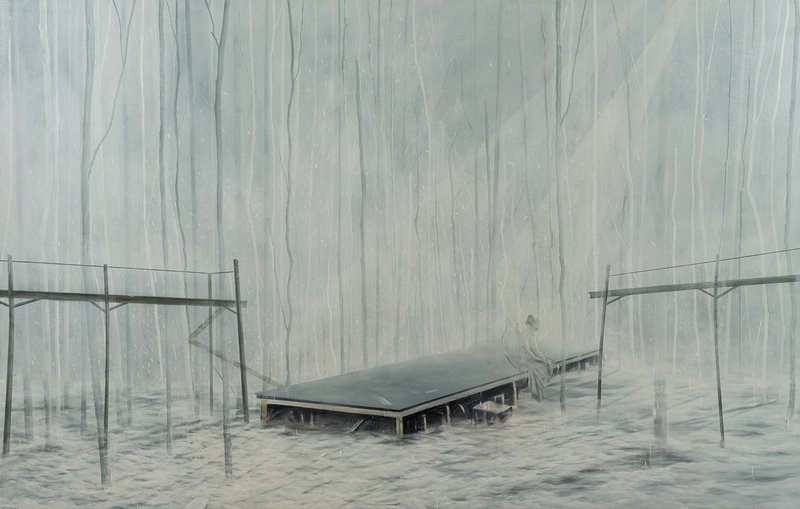
The illusive and deceptive notion of water is always present in Mahsa Nouri’s works. Here, in her “Immerged in Daydreaming” series, she creates a peculiar, polychromatic world. Mahsa seems to have taken this world out of her dreams so that purification from the evils of the real world is made possible.
Artists
130 × 360cm
150 × 220cm
121 × 189.5cm
150 × 180cm
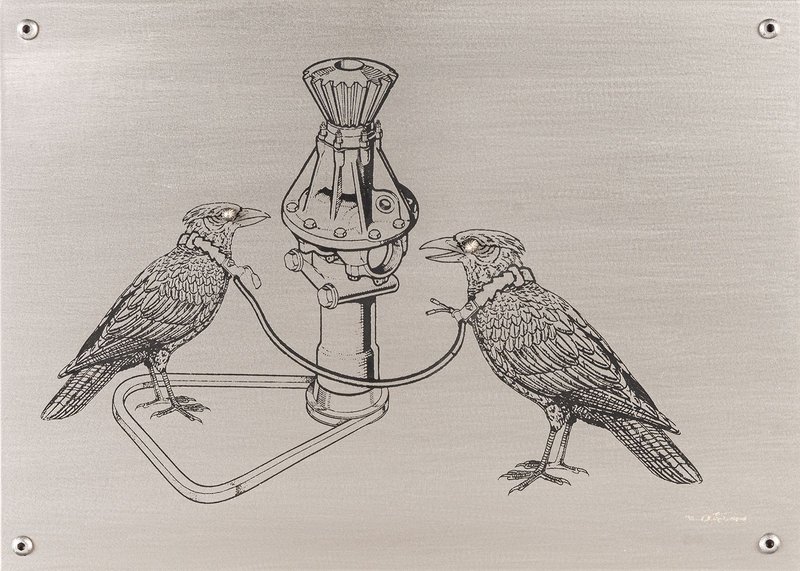
20 × 28cm
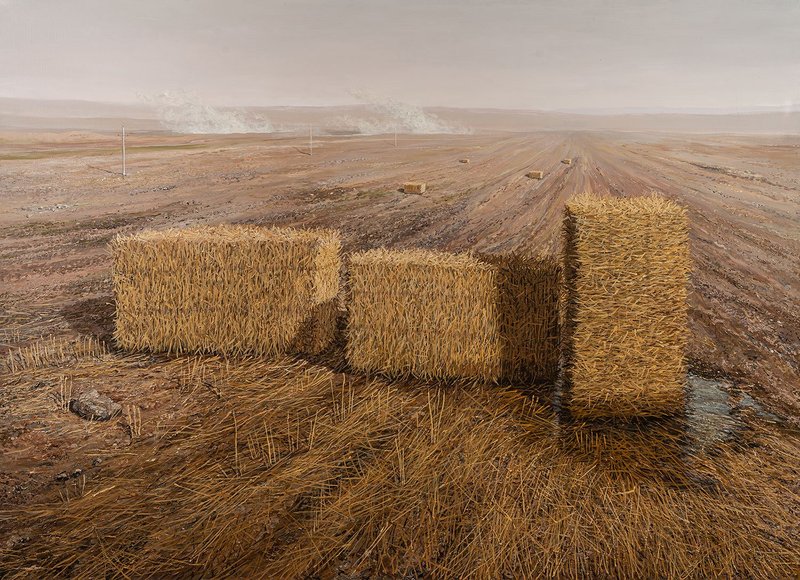
145 × 200cm
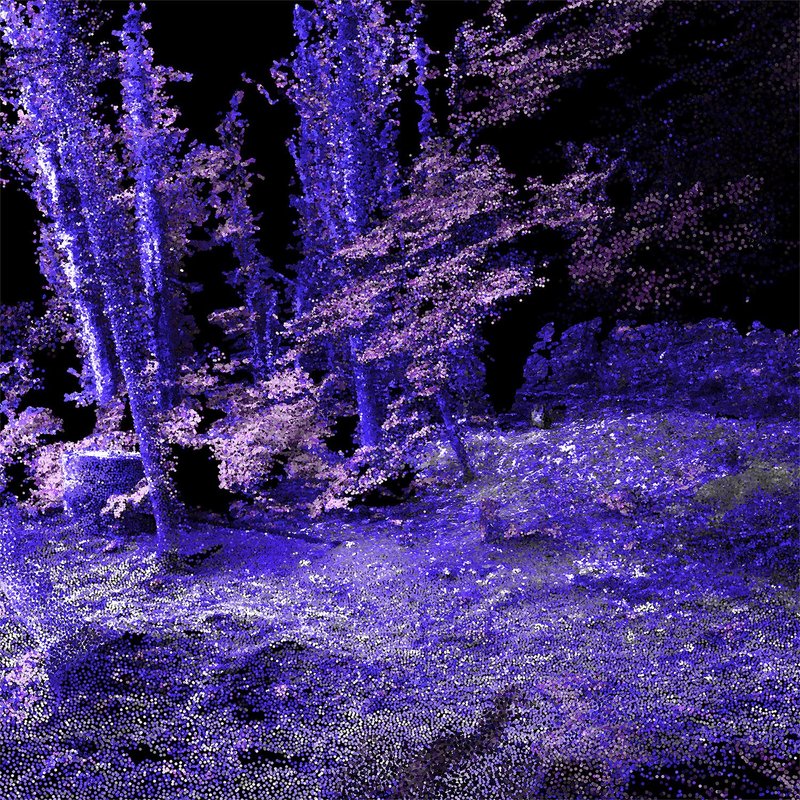
120 × 120cm
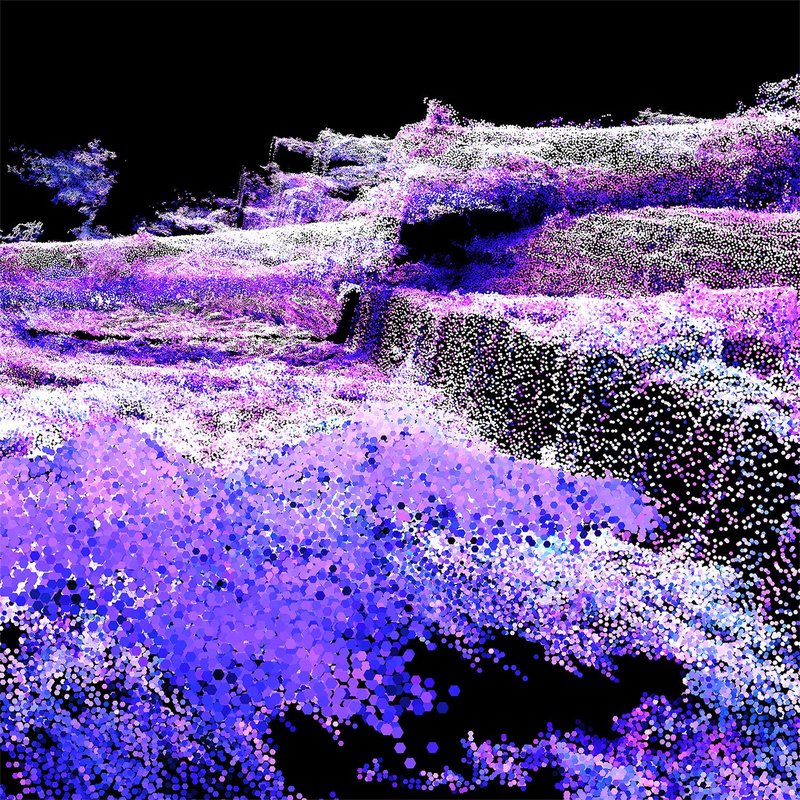
120 × 120cm
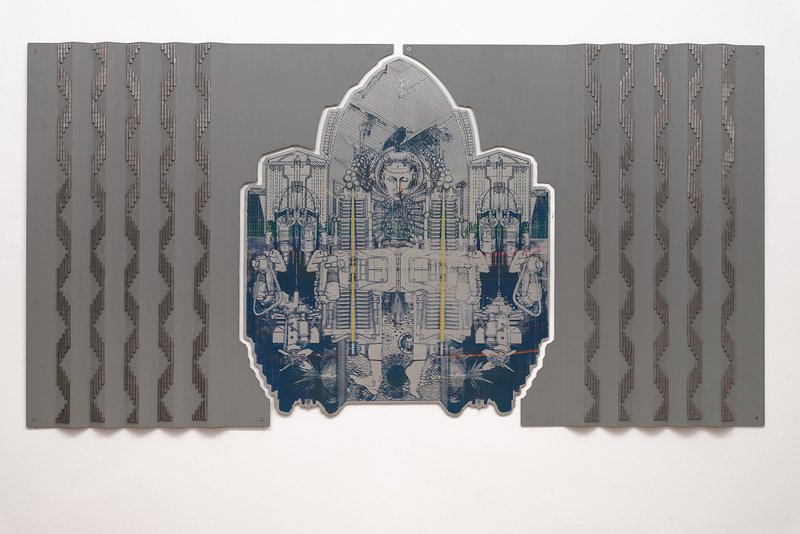
124 × 240cm
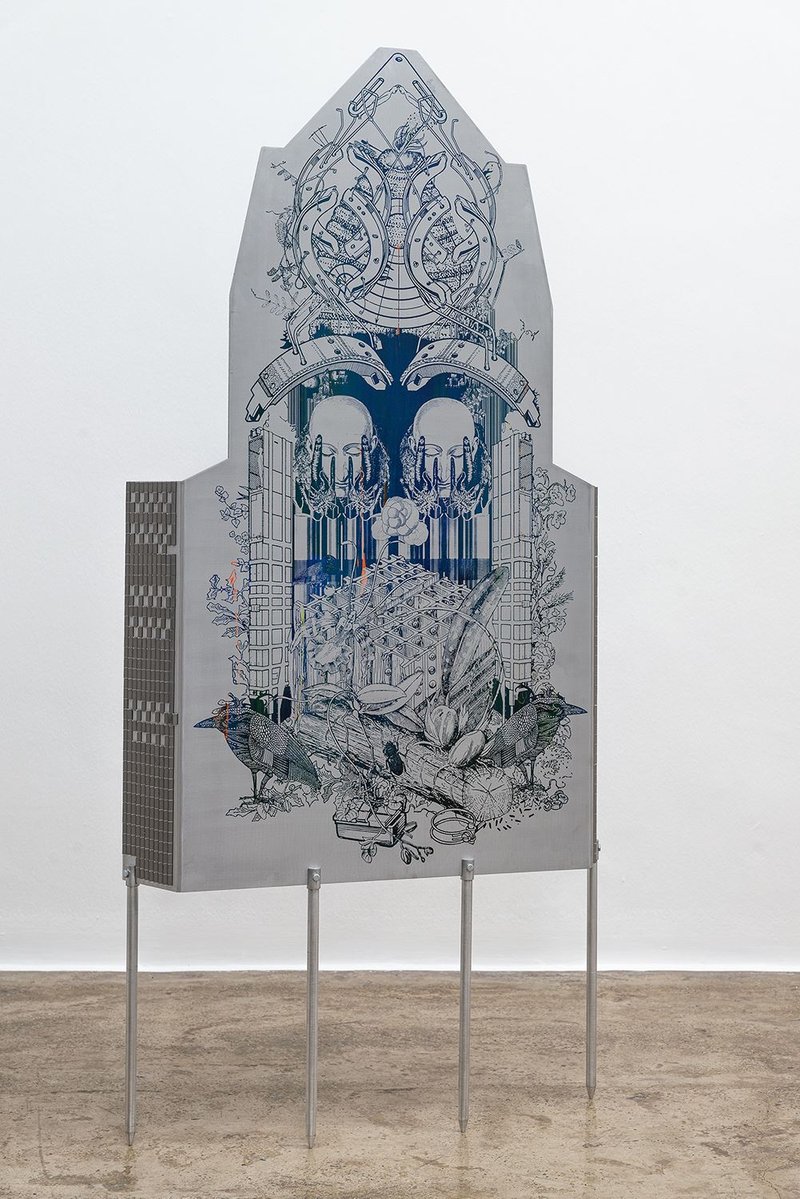
158 × 74 × 12cm
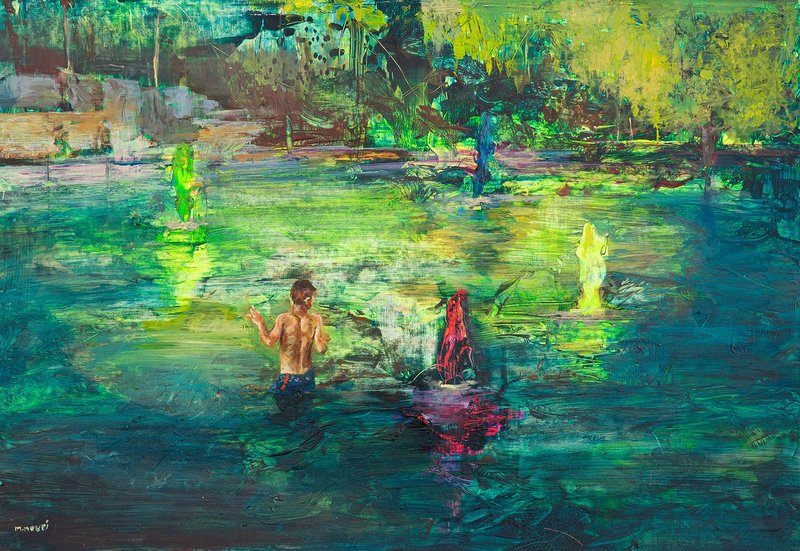
63.5 × 83.5cm
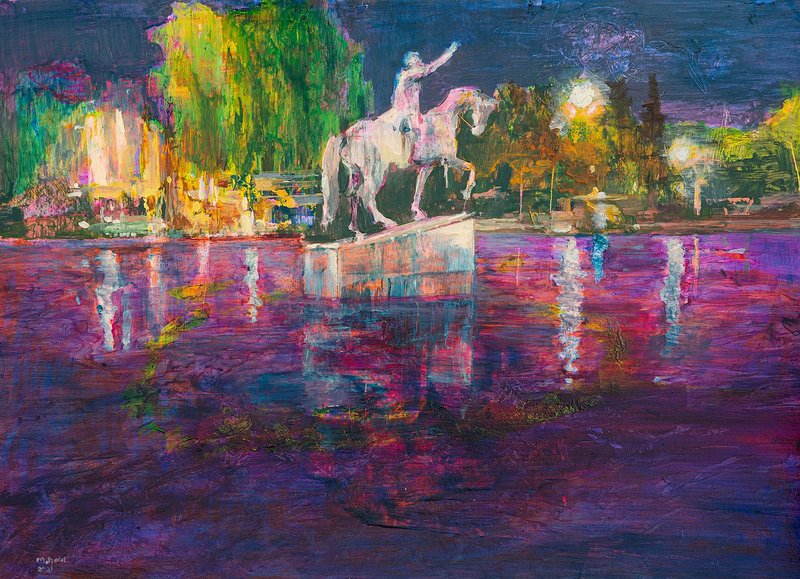
49 × 68cm
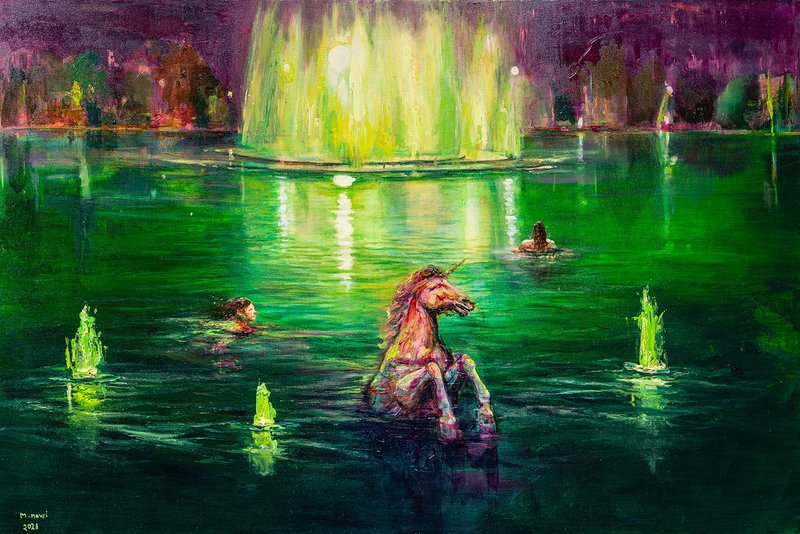
100 × 150cm
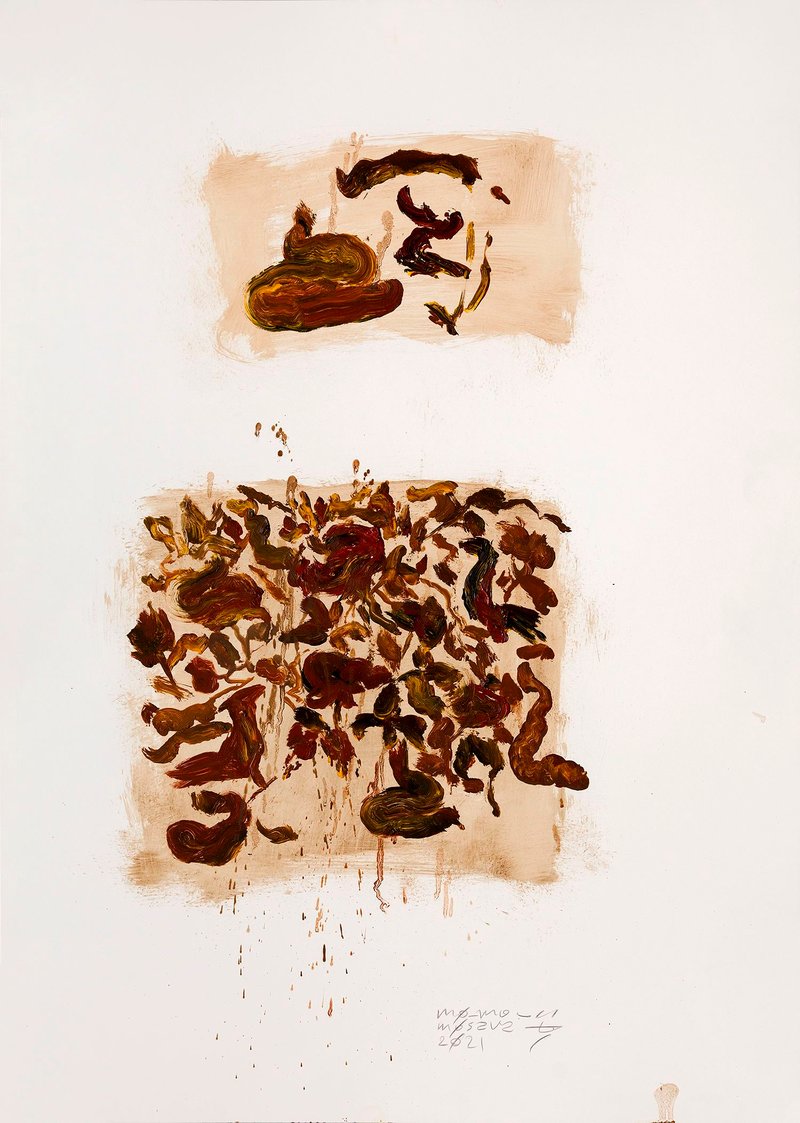
70 × 50cm
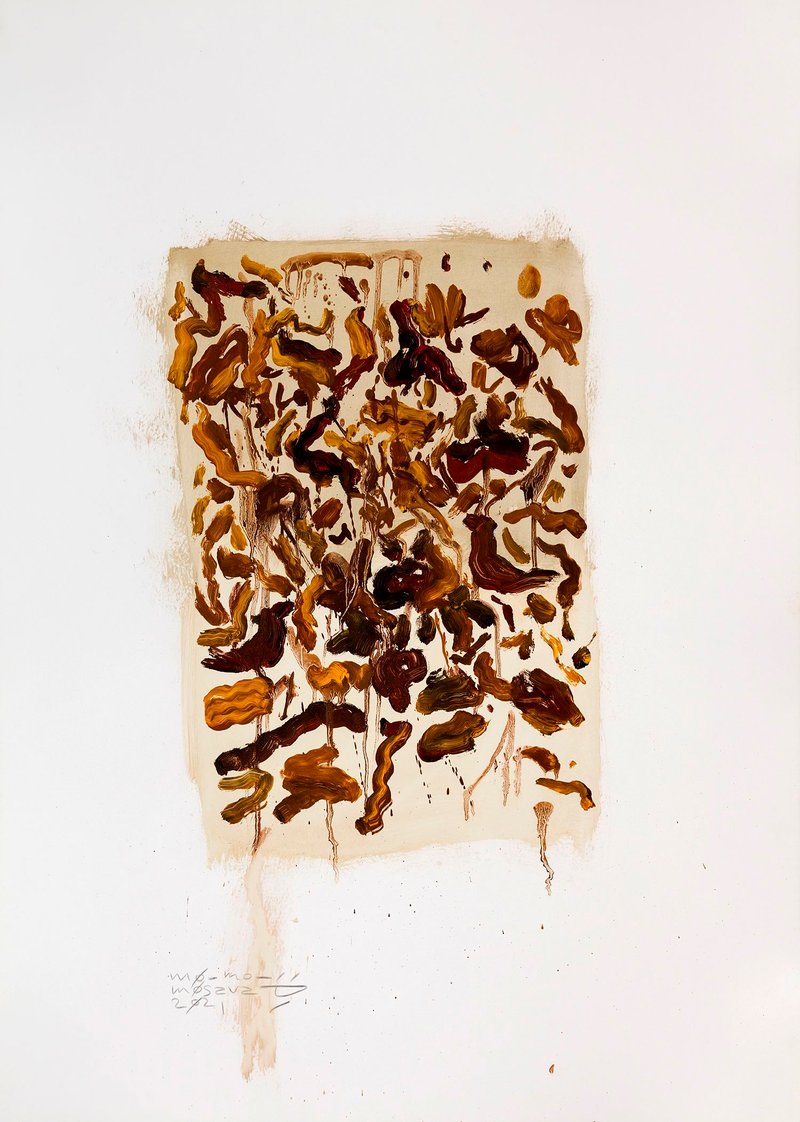
73 × 53cm
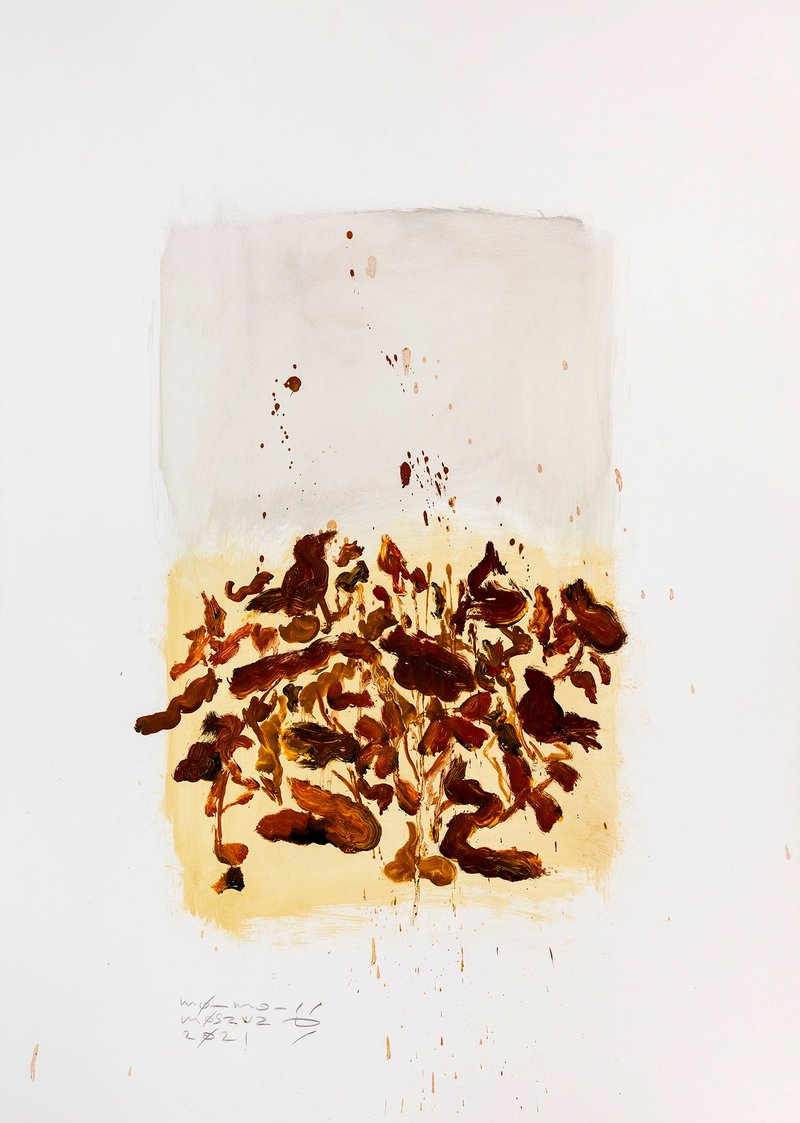
73 × 53cm
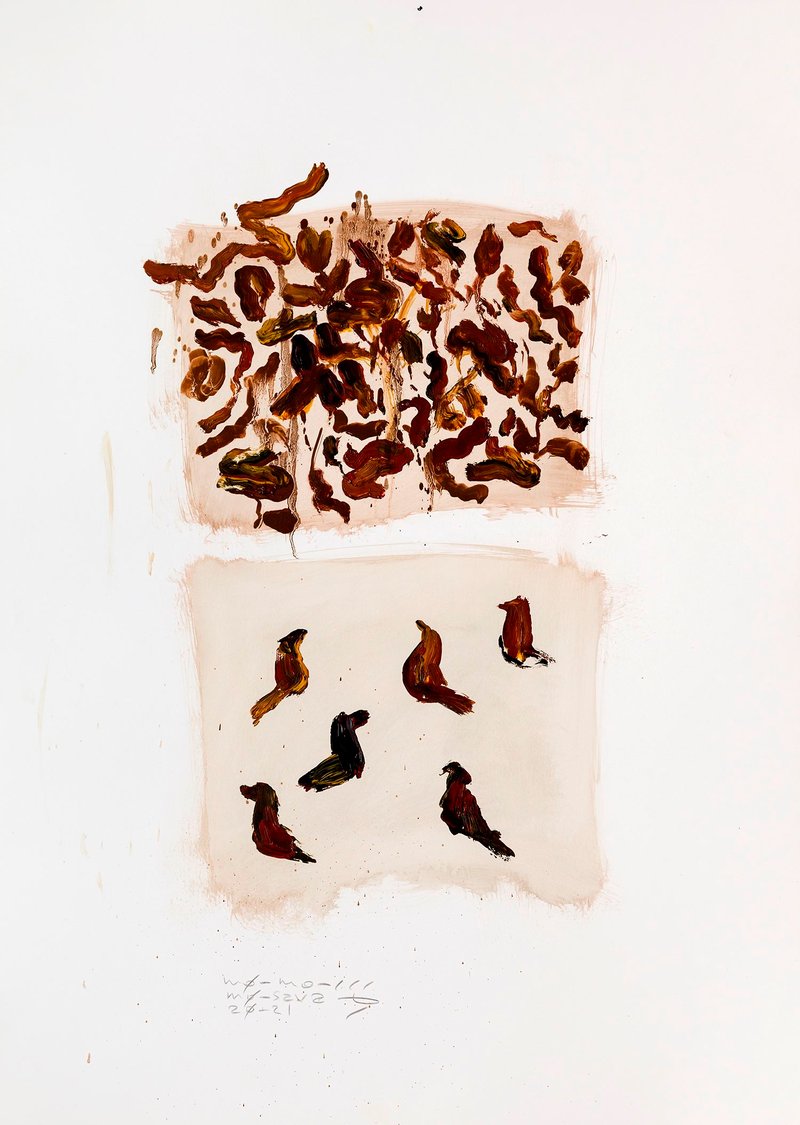
70 × 50cm
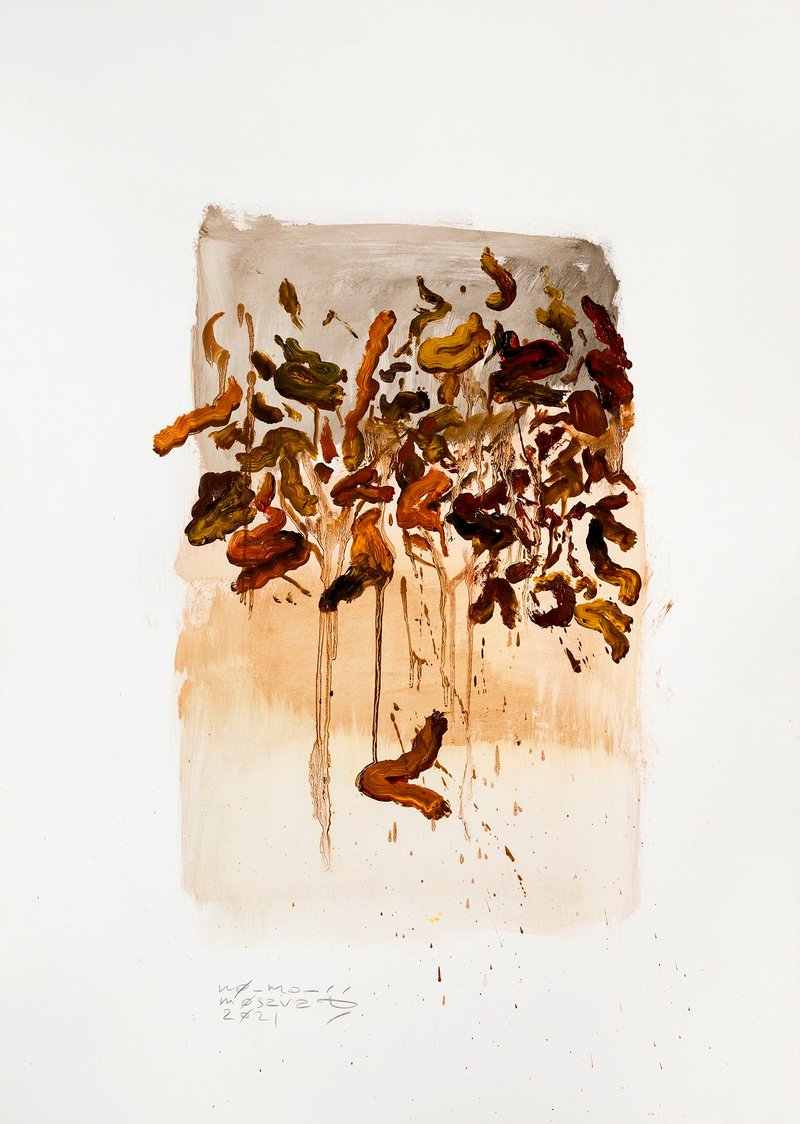
73 × 53cm
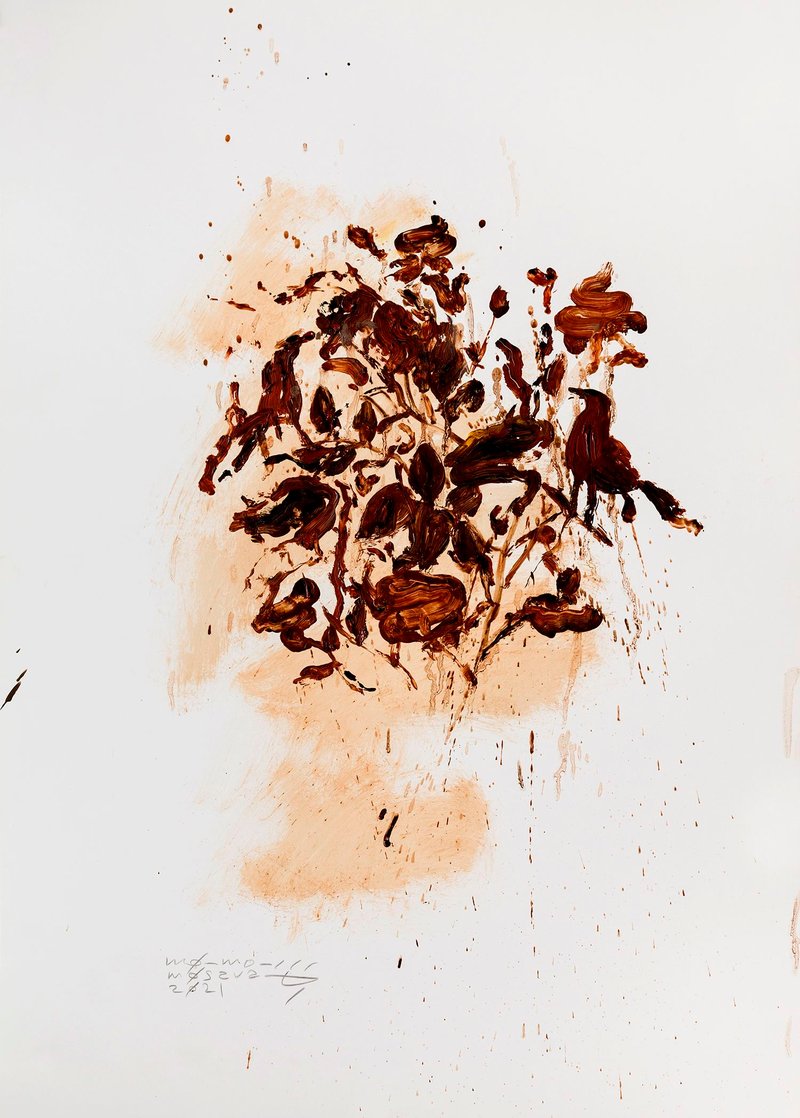
73 × 53cm
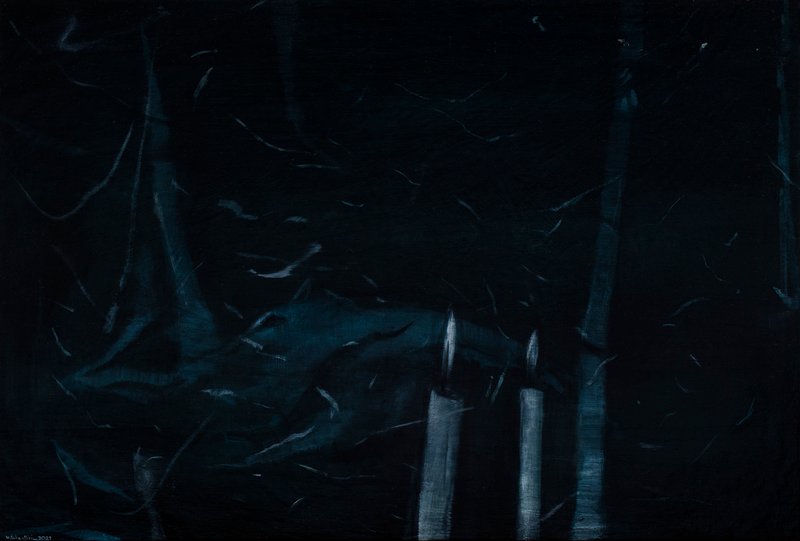
40 × 60cm
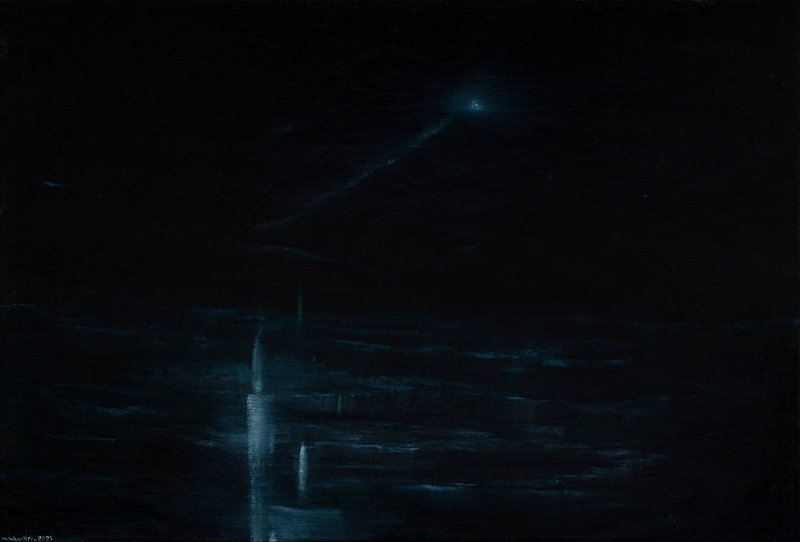
40 × 60cm
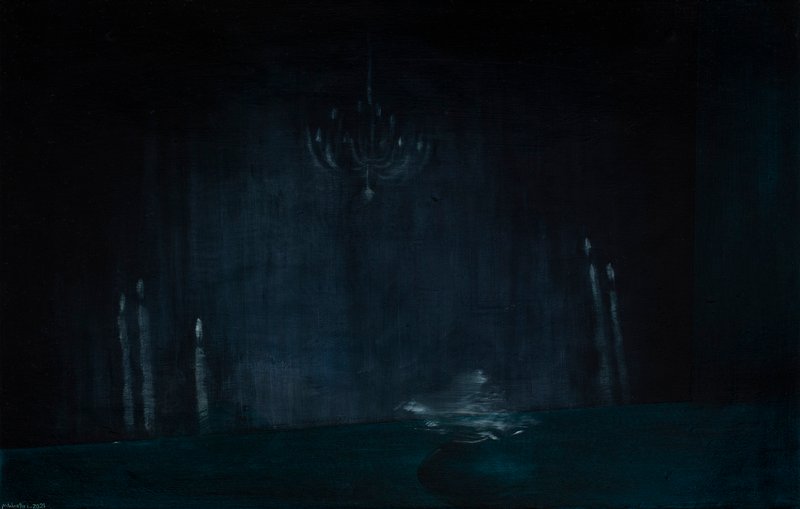
40 × 63cm
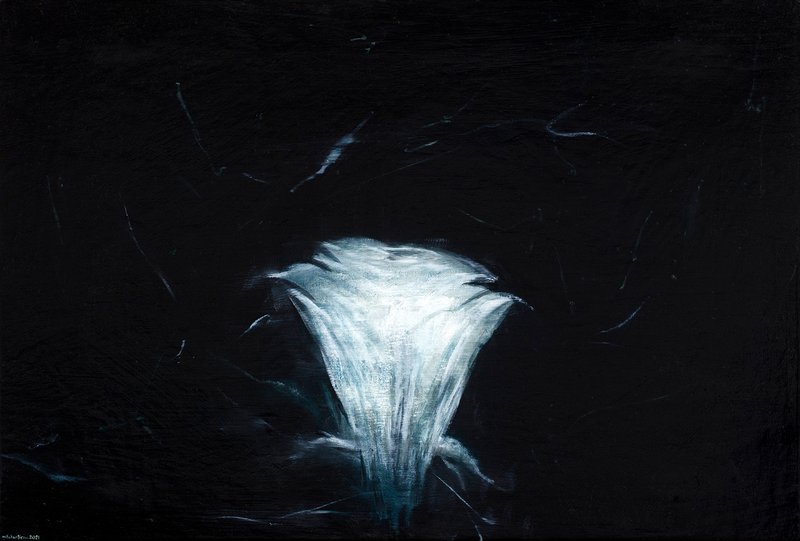
40 × 60cm
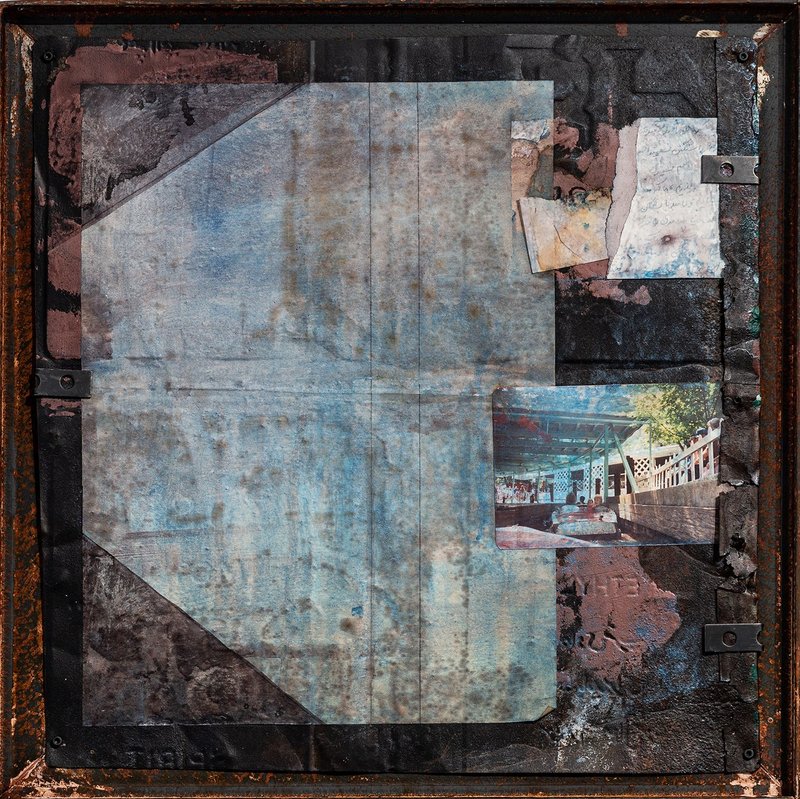
45 × 44cm
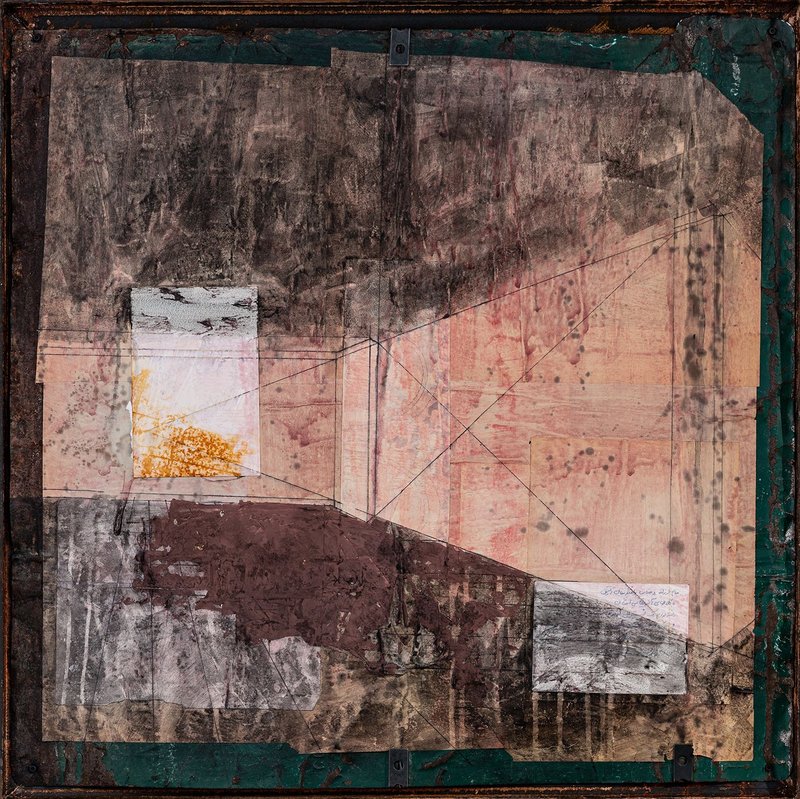
64 × 64cm
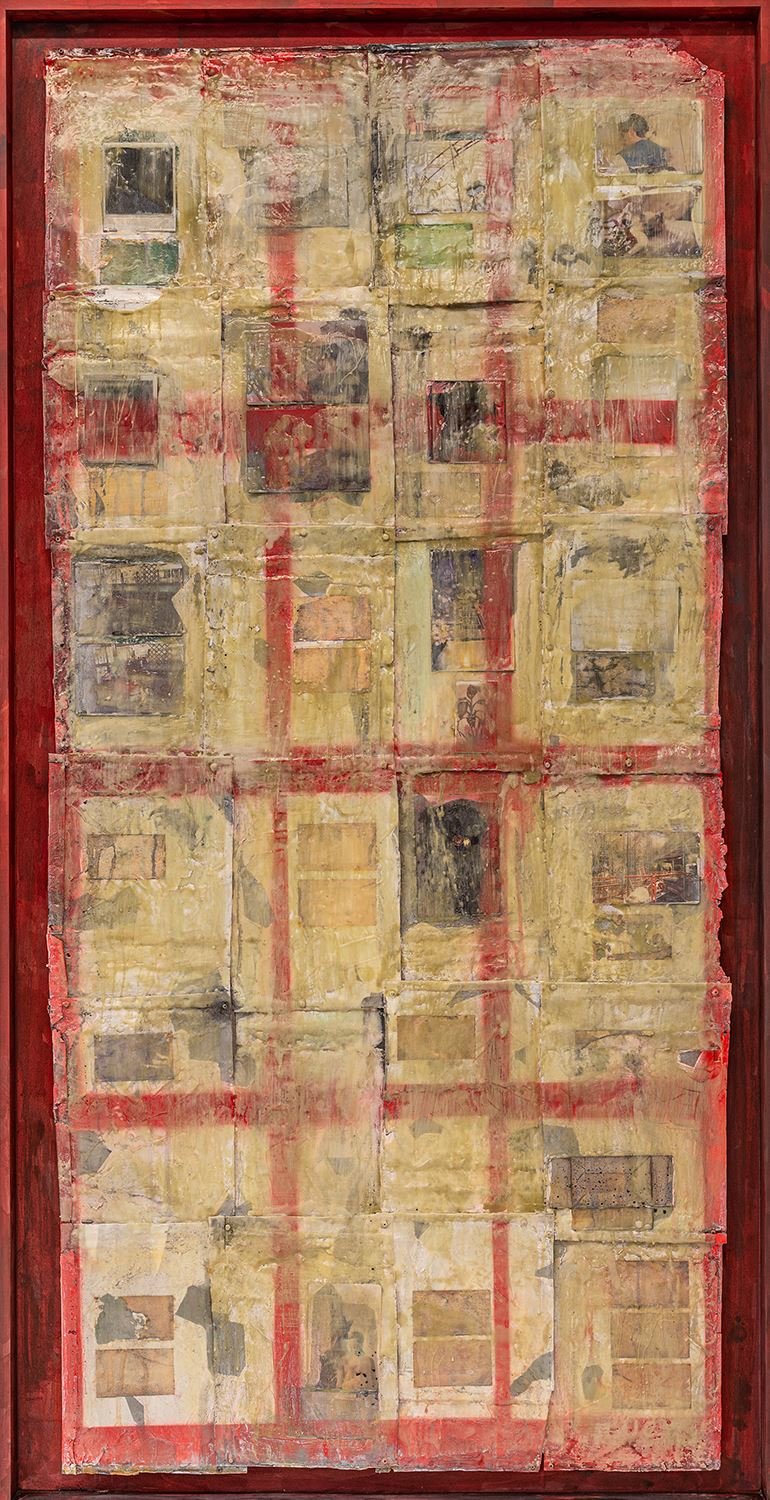
185 × 95cm
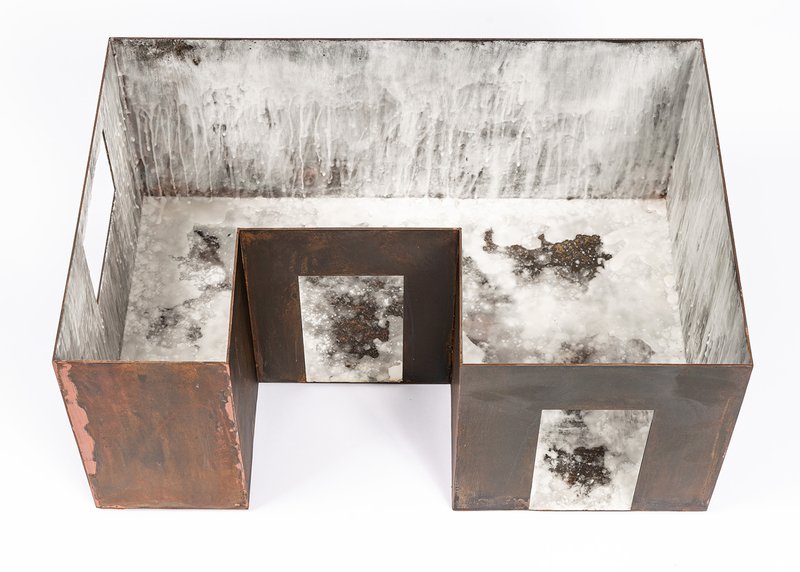
60 × 40 × 25cm
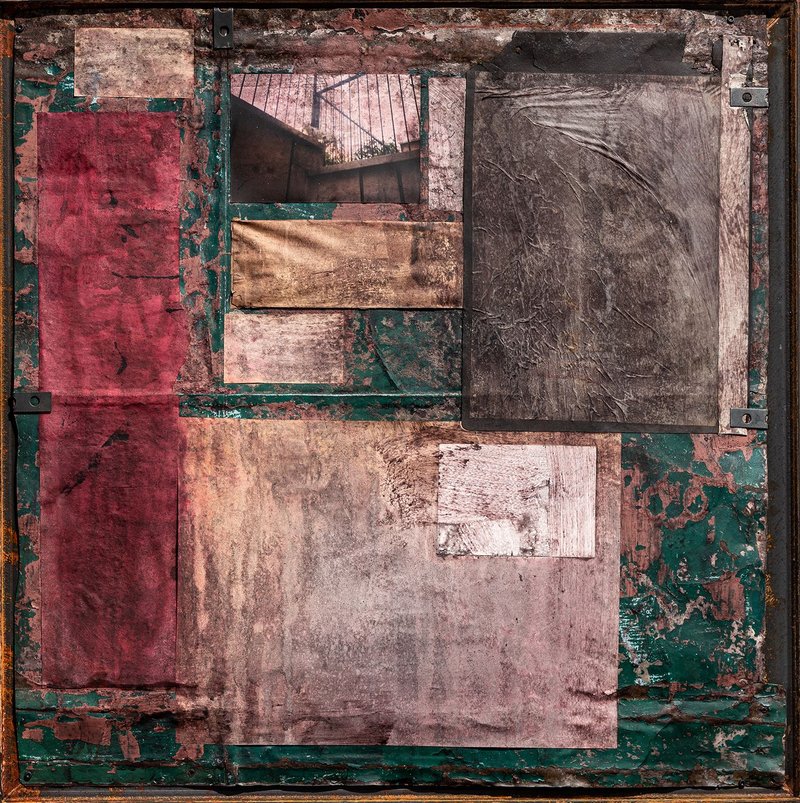
64 × 64cm
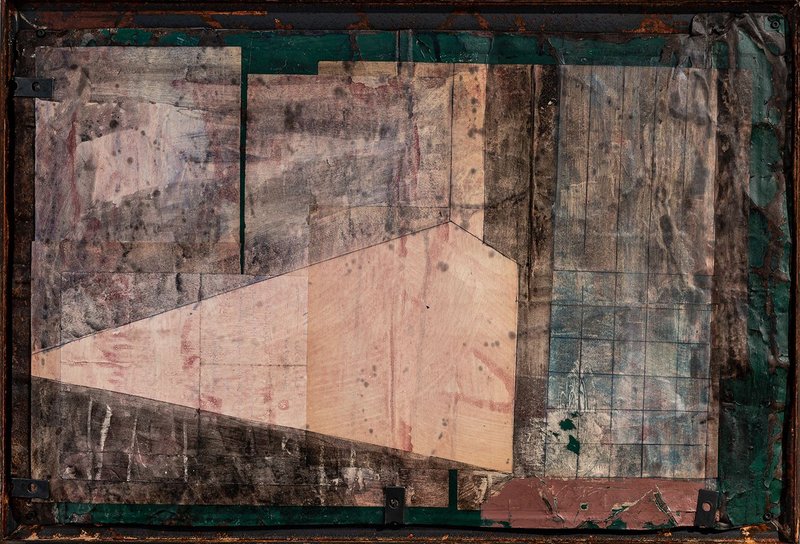
44 × 64cm
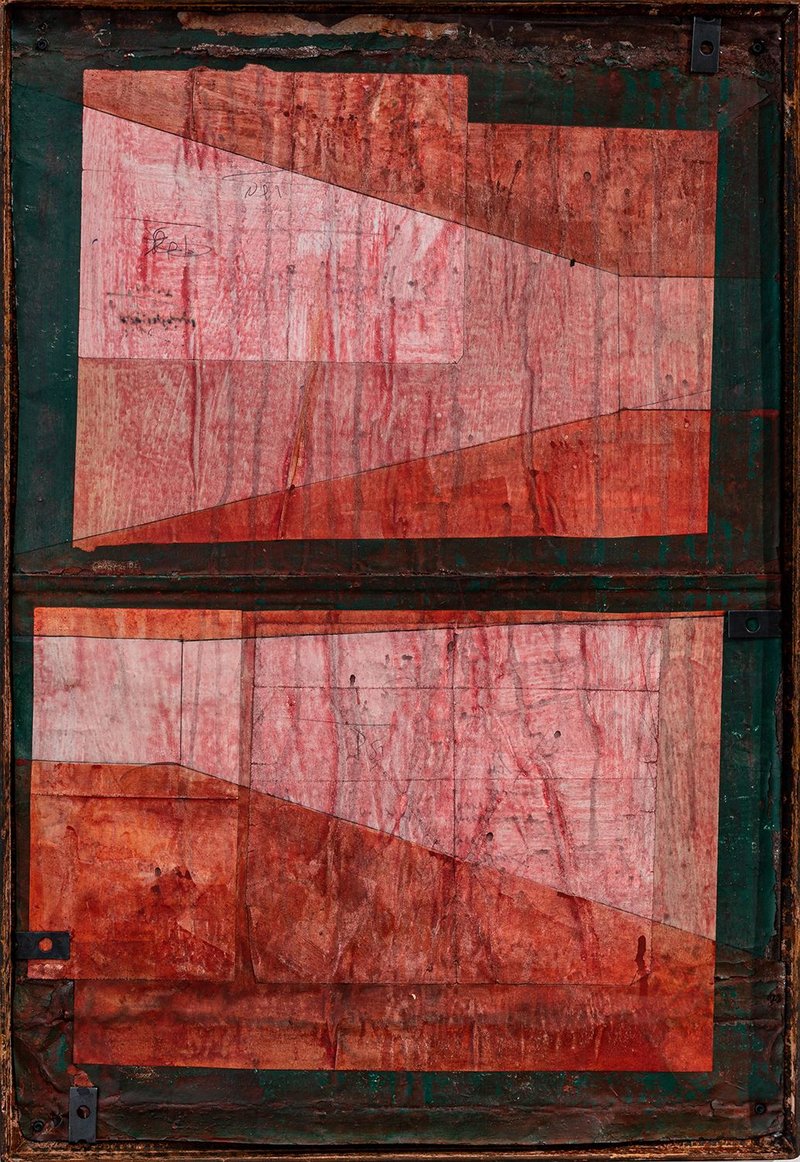
64 × 44cm
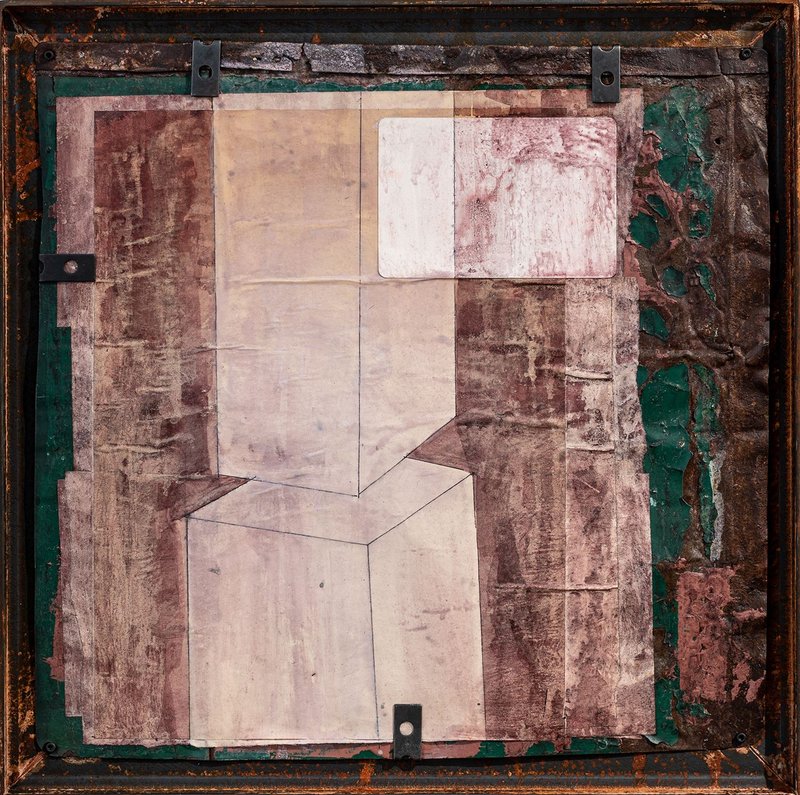
44 × 44cm
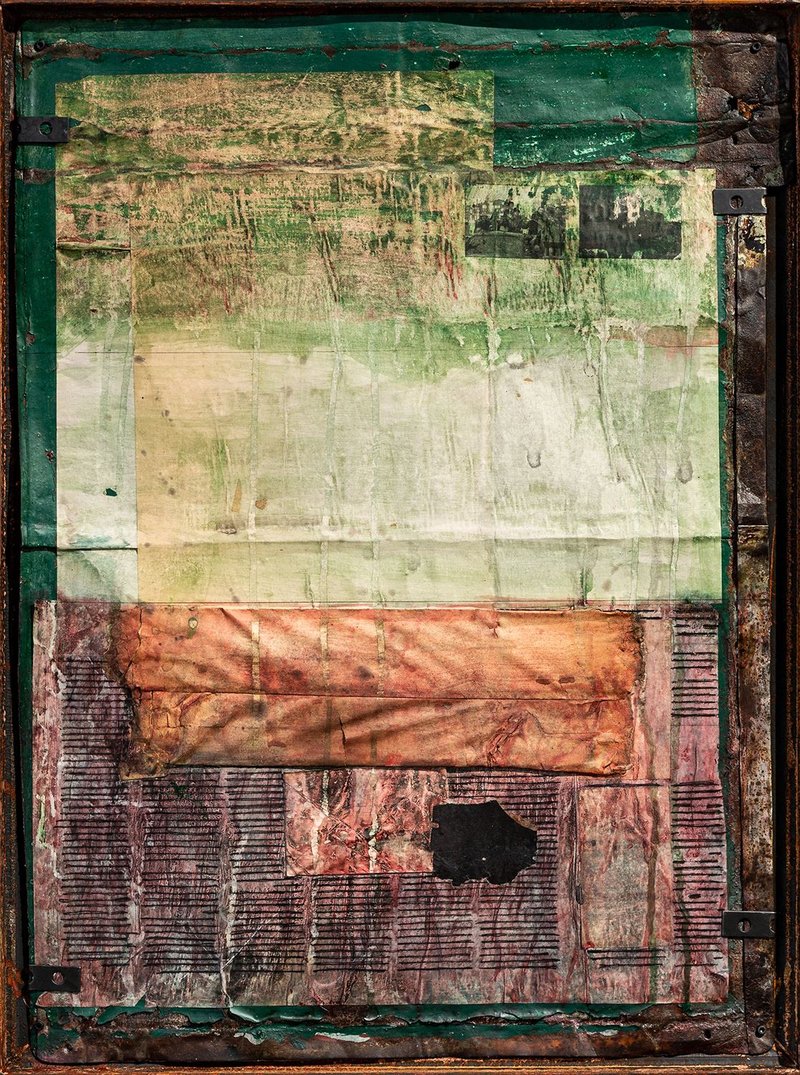
64 × 48cm
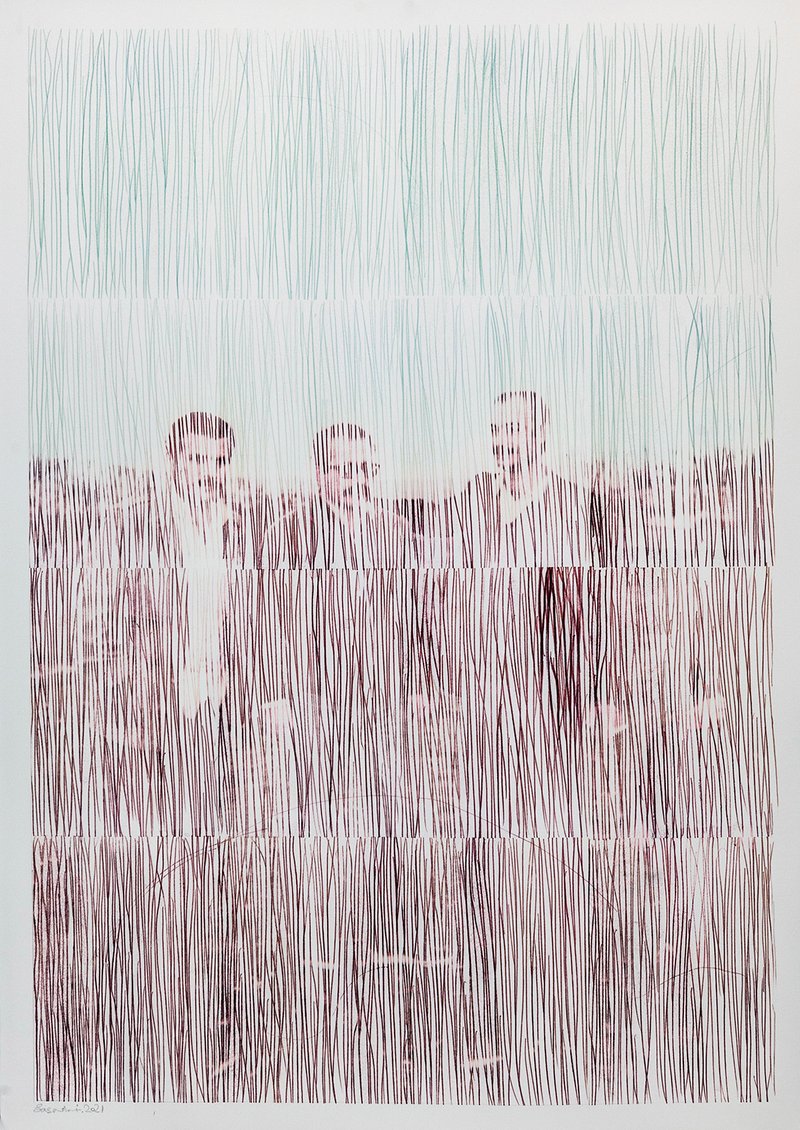
100 × 71cm
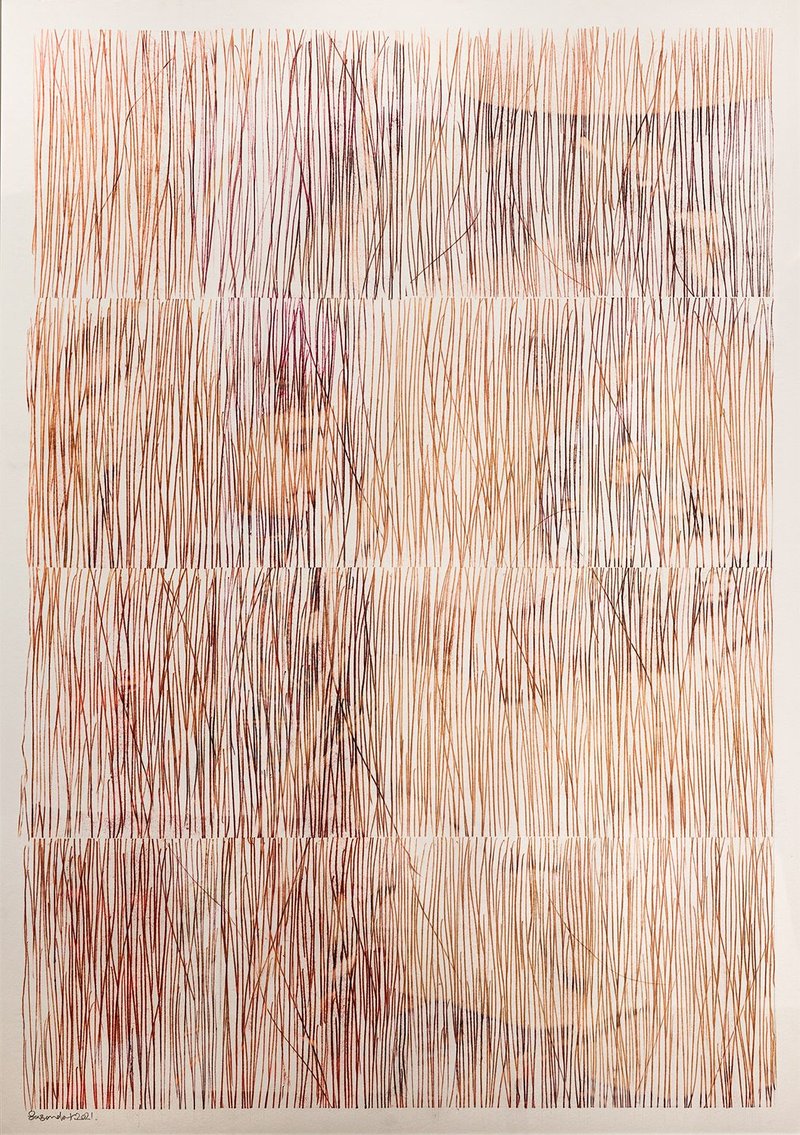
100 × 71cm
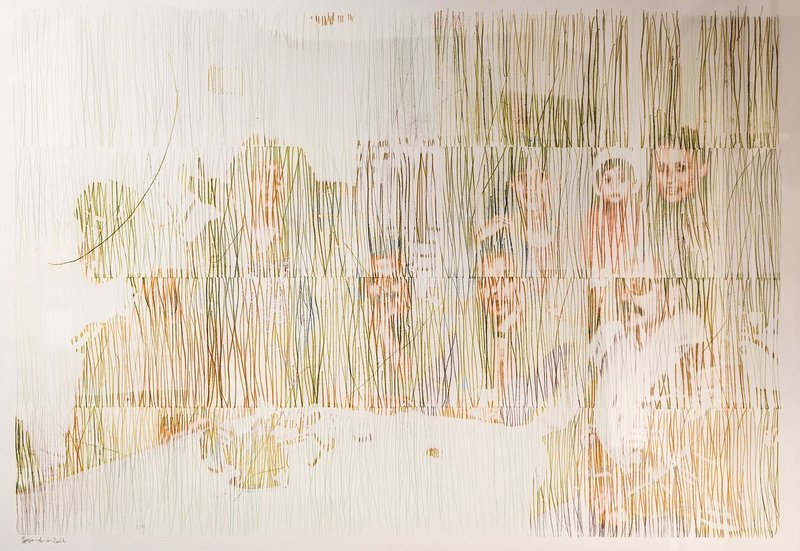
71 × 100cm
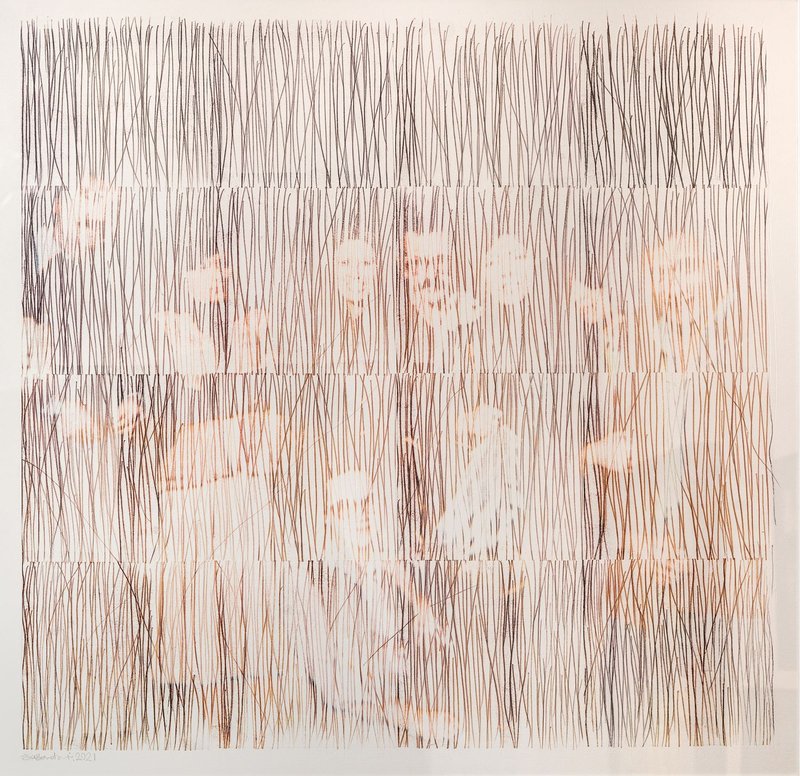
71 × 73cm