Loading the archive.
2022 | Standing
Faraz Naser Sharif
Loading the archive.
Faraz Naser Sharif - Solo Show
13 days to the ending
30 Oct - 13 Nov, 2026

Statement:
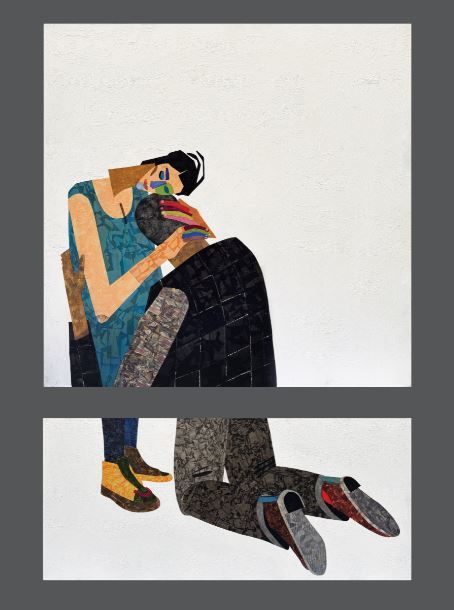
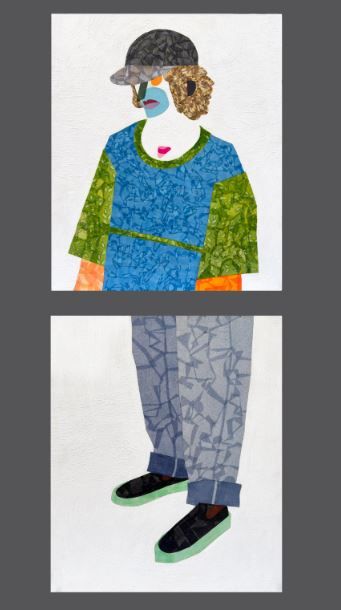
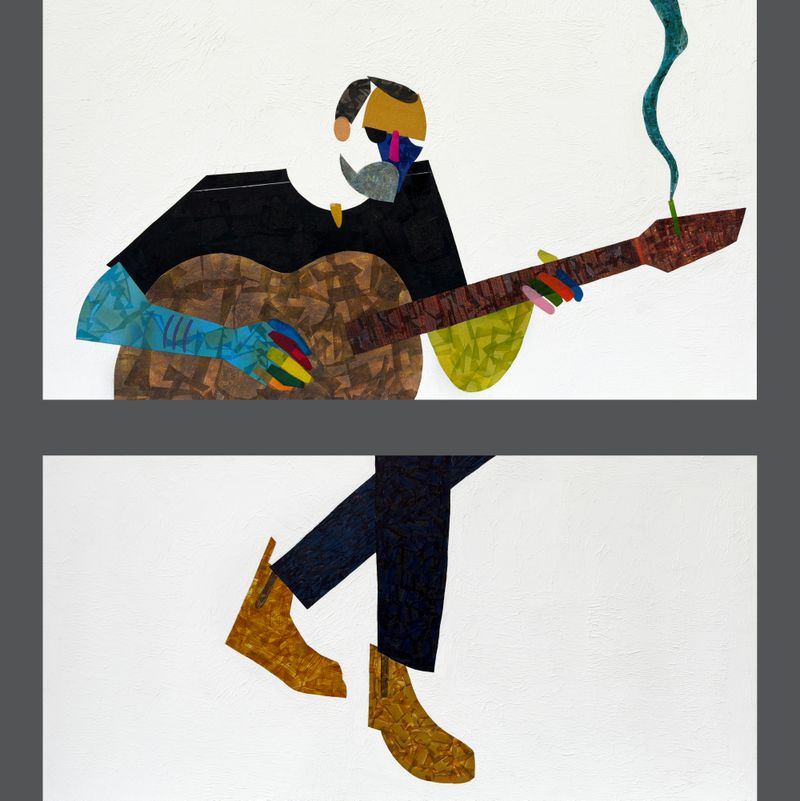
In Faraz NaserSharif’s works, the human figure is positioned at a meaningful distance from the world around it - not as part of a narrative event or a complex scene, but rather as a singular, pronounced, and almost autonomous presence emerging within the white field of the image.
This singularity of the figures constitutes one of the most significant structural characteristics of his series.
Each figure occupies its own space and, rather than becoming lost within a network of relationships between multiple characters or numerous elements, is transformed into an isolated presence - one that can simultaneously carry signs of identity, lifestyle, dress, the body, and contemporary social relations.
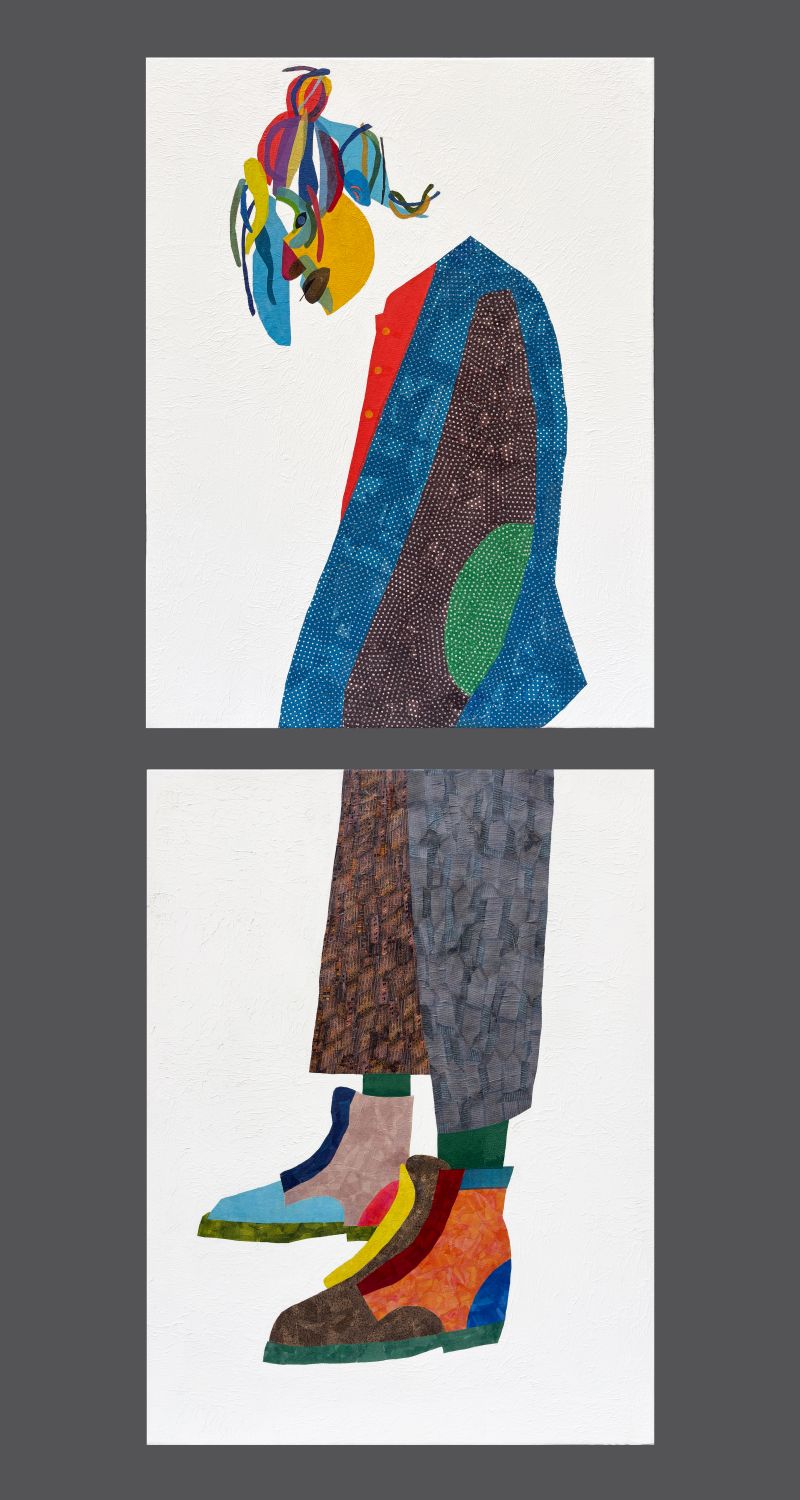
Stylistically, his works are grounded in a form of collage and assemblage in which colored tissue papers function not merely as materials for producing color, but as independent elements in the construction of the image.
The subtle layering and folding of these materials create a textured and vital surface, so that color is no longer merely a visual quality but also acquires a material dimension.
The differences between opaque and translucent surfaces, the folds, interruptions of light, and controlled irregularities push the image beyond the level of mere representation and endow it with a distinctly tactile quality.
Here, material does not simply serve the image; it constitutes a part of the image’s visual language itself.
This material approach also establishes a direct connection with the construction of the figures.
The bodies are formed through the juxtaposition of colored fragments, as though the body were not a pre-existing whole but rather a structure composed of multiple parts, surfaces, signs, and layers of identity.
For this reason, clothing, shoes, hats, hands, faces, and other visible details function not merely as descriptive elements, but each operates as a fragment of a larger visual system.
The pronounced chromatic contrasts and the juxtaposition of saturated colors intensify this fragmented structure while simultaneously lending the works a playful, dynamic, and distinctly contemporary quality.
The diptych structure of the works acquires significance within this same context.
Their division into two panels is not merely a formal decision to separate the image across two surfaces.
Rather, it introduces a pause and a fissure within the overall image.
The interval between the two panels preserves the unity of the figure and the composition while simultaneously evoking rupture and incompleteness.
Within this interval, the figure appears suspended between wholeness and fragmentation, as though the body requires both surfaces in order to become complete, yet can never be entirely stabilized within a single unified plane.
This characteristic, in conjunction with the collage technique - which is itself fundamentally based on the bringing together of fragments - renders the structural logic of the series all the more coherent.
Against this complex and chromatically rich structure, the white background assumes a decisive role.
The whiteness of the ground is neither a neutral nor merely decorative space; it functions as a space of silence and absence.
It allows the figures to emerge with greater clarity and autonomy.
The intense colors and varied material surfaces reach their highest degree of visual intensity against this whiteness.
At the same time, this surrounding emptiness imparts a certain sense of isolation and solitude to the figures.
The bodies appear suspended within a void, and this condition shifts the viewer’s attention away from an external narrative and toward the human presence itself and its visual construction.
The overall composition of the series is founded upon an economy of elements.
Despite the considerable diversity of color, pattern, and detail, the artist avoids excessive accumulation and preserves the figure as the central nucleus of the composition.
This concentration ensures that the density of detail does not lead to disorder within the overall structure.
In fact, the series can be understood as moving between two poles: on the one hand, visual richness, chromatic diversity, and the abundance of texture; on the other, emptiness, whiteness, and the stillness of the surrounding space.
To a considerable extent, the visual character of these works emerges from precisely this balance between accumulation and void.
One of the most striking characteristics of the series is its departure from realistic representation and its movement toward a form of reduction and semiotic reconstruction of the figure.
The bodies remain recognizable, yet through processes of simplification, omission, exaggeration, and the replacement of realistic forms with chromatic and geometric planes, they are transformed into visual structures.
This process renders the figure simultaneously familiar and unfamiliar: we recognize the human being, yet encounter it through a new visual language.
In this series, popular culture is employed not merely as a source of visual inspiration, but as a symbolic language through which contemporary life and urban identity are represented.
Drawing on collage, vibrant colors, and forms derived from the aesthetics of modern consumer culture -from trendy clothing and street styles to everyday icons such as coffee cups and mobile phones -the artist dissolves the boundary between high art and the signs of everyday life.
The figures in these works are collages of patterns and modern commodities, transforming consumer culture into a vehicle for articulating isolation, belonging, self-expression, and the contemporary individual’s relationship with urban spaces.
They offer a vivid reflection of how popular culture shapes the collective unconscious and, in turn, our image of ourselves and of the other.
The series can be understood as an exploration of the relationship between the figure, collage, material, color, and void.
The use of colored tissue paper transforms the surface of the work from a merely pictorial ground into a material and textured plane; the diptych structure foregrounds the logic of the image as fragmented yet continuous; and the white background transforms the solitary figures into autonomous and concentrated presences.
The result is a visual language in which the human body is not merely the subject of painting, but rather a site at which color, material, texture, sign, and composition converge - a presence that is at once intensely visible within the surrounding white void and carries with it a sense of profound, fundamental solitude.