

18 Sep - 18 Dec, 2025
Statement:
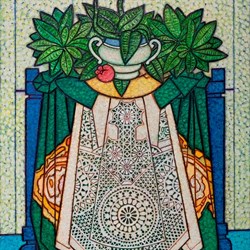
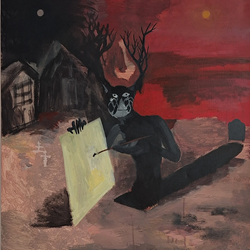
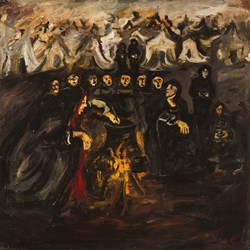
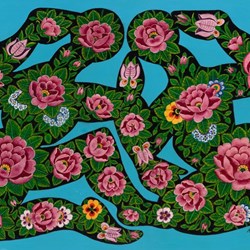
Afshin Pirhashemi is one of the most influential contemporary Iranian artists, whose exhibitions, awards, records, and distinctive artistic persona have brought him remarkable acclaim.
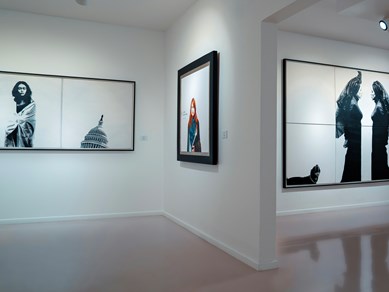
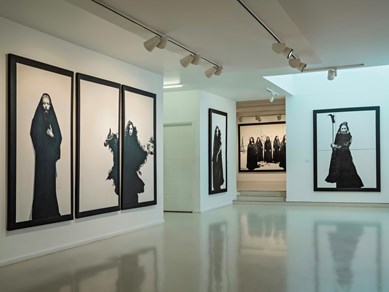
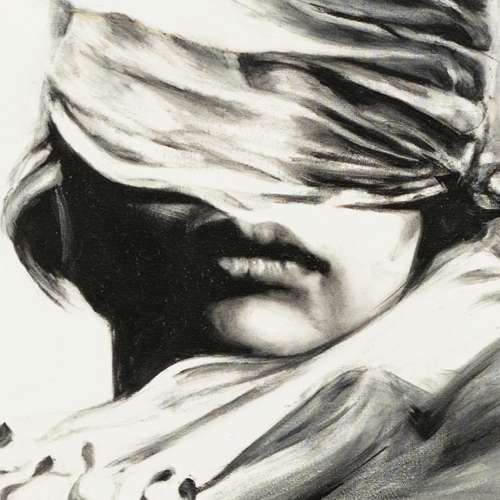
Since the early 2000s, he rose to prominence with his black-and-white portraits and figures of young women - silent yet confrontational presences that emerged with striking intensity.
These works stood at the forefront of a neo-expressionist mode in Iran: figurative paintings with a critical undertone, deliberately disregarding the modernist principles of color, composition, and form.
His figures appeared outside any fixed time or place, often gazing directly at the viewer with a questioning look, challenging prevailing clichés.///
They marked the first significant representation of women in Iranian painting that rejected romantic or sentimental depictions, offering instead a darker critique of the idols of their time.
This approach, perhaps born from the artist’s lived experience or his broader worldview through the lens of womanhood, set his work apart.
Pirhashemi’s paintings carried unique qualities that established him as a pioneer of contemporary Iranian art. He rendered his entirely black figures against near-empty canvases, placing them in symbolic states detached from context.
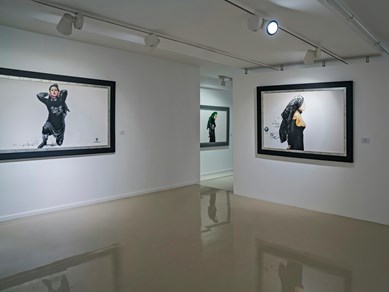
Often, an object or graphic motif-ranging from guns and knives to luxury car logos - added a layer of symbolism and semiotic complexity.
Through the bold insertion of textual elements, from advertising slogans to lines of Rumi’s poetry, Pirhashemi deepened the intertextual resonance of his works.
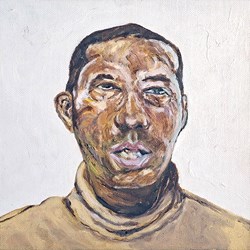
Gradually, color entered his paintings, though he never pursued full realism. While his figures were always based on photographs, he resisted photorealistic representation.
Instead, he highlighted the painterly quality of his art-obscuring backgrounds, exposing brushstrokes, reducing color palettes, and integrating graphic elements.
His works became a source of inspiration for younger generations of artists and, over time, helped shape a broader movement in contemporary Iranian painting.
Alireza Samiazar
Installation view