





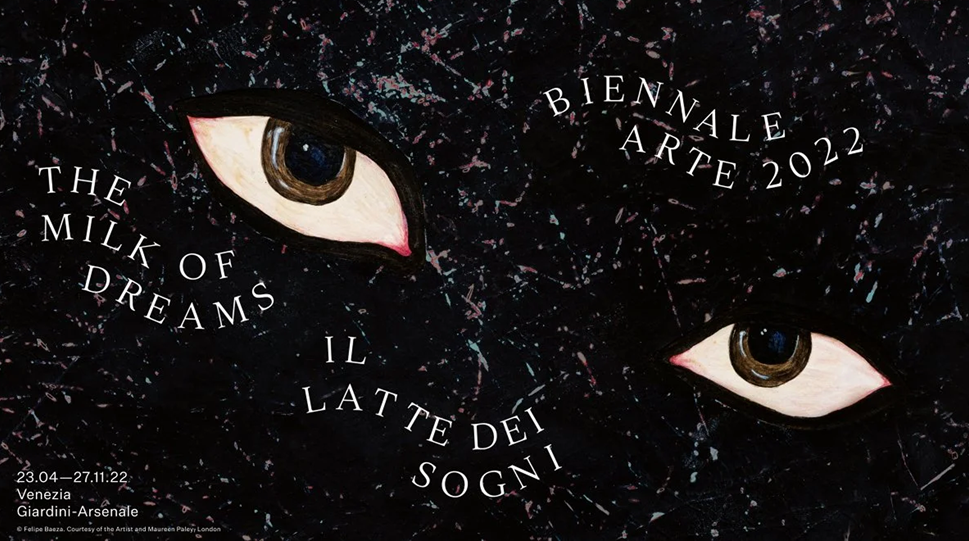
Venice Biennal Names 213 Artists participating In Its 2022 Edition
The Venice Biennale, the world's biggest art exhibition has announced the name of 213 artists participating in the main event of its 2022 edition. This event will be held from May 23 to November 27 in Italy. 180 of those 213 artists have never before participated in the Venice Biennale.
The main exhibition of this event entitled "The Milk of Dreams" will be curated by Cecilia Alemani, director and chief curator of High Line Art in New York. The name of this collection refers to the series of drawings by Surrealist artist Leonora Carrington that were later turned into children's books. Alemani has stated the show will focus on three distinct sections: "the representation of bodies and their metamorphoses; the relationship between individuals and technologies; the connection between bodies and the Earth." The show will include more than 1,000 works. The Venice Biennale was originally scheduled to take place in 2021 but has been postponed a full year as a result of the pandemic. As soon as that delay was announced in 2020, Alemani made it clear that she did not want to curate what she called "the coronavirus biennial". She has also stated: "Often, during times of crisis, there is a shift in artistic production, and if that happens, I want to try to capture it,".
Due to this delay, the Venice Biennale coincided with Documenta(Kassel, Germany), a touted quinquennial. This year's Documenta will be organized by the Indonesian collective Ruangrupa, whose artists list lacks many Europeans who regularly participate in European biennials.
The Venice Biennale includes artists who are well-known in the U.S. and Europe including Barbara Kruger, Cecilia Vicuña, and Paula Rego. However, priority is given to artists who are younger or less recognized.
It is no surprise that Alemani's edition will present many figures of bygone times since the main Venice Biennale exhibition includes works by dead artists for many years. According to Alemani, her exhibit will contain "time capsules," which will highlight the themes and artists of the early 20th century. Alemani called her Biennale "a transhistorical exhibition, creating a dialogue between the present and past and creating a dialogue between stories of exclusion."
She also added: "Many contemporary artists are imagining a posthuman condition challenging the presumed Western condition using the white man as a measure of all things. They propose different alliances and fantastic bodies. This is why the exhibition includes a large amount of female and gender-nonconforming artists."
Source:«ARTnews»

