





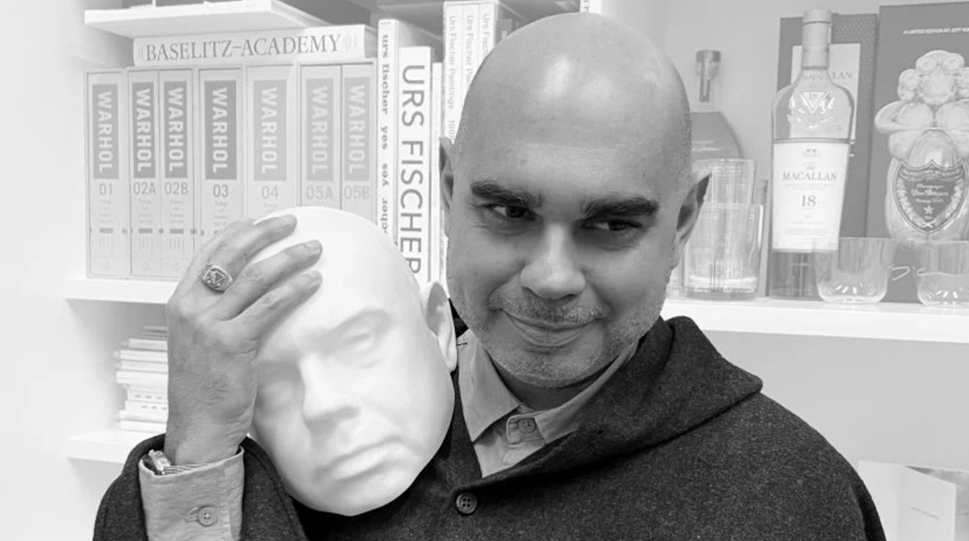
Artnet Interview with Andisheh Avini, Gagosian Director, on Working With Artists While Being One, Too
11 Feb 2026Gagosian Senior Director Andisheh Avini has been with the gallery for over 25 years, working with a broad range of artists and estates and seeing and contributing firsthand to Gagosian’s evolution from a few U.S.-based spaces to an international force with well over a dozen locations worldwide. An artist himself, Avini has helped foster and promote some of the gallery’s most significant artists, from Adam McEwen and Piero Golia to Donald Judd and the Judd Foundation. Along with his work with artists and estates, Avini plays a vital role in the gallery’s exhibition program and, more specifically, numerous annual art fair presentations.This month, Gagosian is participating in the much-anticipated inaugural edition of Art Basel Qatar. Timed to the event, we reached out to Avini to learn more about the course of his career at Gagosian and what went into bringing the new presentation at Art Basel Qatar to life.
- As one of Gagosian’s longest tenured directors, you’ve witnessed immense change over the decades—changing markets, changing tastes, a changing New York. Looking back, are there any major shifts either in the gallery’s history or the art world at large that have been particularly impactful to either your career or the gallery’s trajectory?
A watershed moment came in the years after September 11, 2001, when global markets really began to widen. Looking beyond the United States allowed us to work with artists we could not always show in New York, prompting the gallery’s expansion across Europe and eventually to Hong Kong. Many of these new spaces—including our second gallery in London and our first in cities such as Rome and Paris—were inaugurated with new bodies of work by Cy Twombly. I worked with Twombly for several years, and that period was defining for me. It was a thrill, and the energy was intoxicating. As the gallery grew, so did I.
- How would you describe your ethos or approach to working with artists, estates, and foundations? Who are some of the artists that you’ve worked with the longest?
I think I have a certain understanding of how to work with artists because I am one. For me, the artist always comes first, and that requires a real connection and friendship. Many of these relationships have been long-term, including those with Adam McEwen and Piero Golia.
Perhaps the longest is with the Hanson family—Duane Hanson Jr. actually hired me as an intern at Gagosian. I also work closely with Y.Z. Kami, the Judd Foundation, and the Richard Diebenkorn Foundation. One of the more recent artist relationships for me is Maurizio Cattelan, which has been another inflection point.
- When did you first become involved in Gagosian’s art fair program? What about art fairs in general, or Gagosian’s fair program specifically, is so compelling?
In my second year at the gallery, I went to Art Basel as an art handler. After that, I attended the few fairs that the gallery participated in at the time. Gradually, the opportunity became bigger—the art world continued to expand, and fairs became increasingly important gatherings throughout the year for curators, directors, artists, and collectors.
I felt that the fairs were important, and as I grew in my role, I wanted them to be as strong as possible, to show the most powerful presentation in a very short amount of time. Curating a puzzle is difficult, but you find new dialogues between works that can be interesting. We have seen a number of new fairs launch in new locations, and we are particularly excited about Qatar.
- Can you give us some insight into the process or decision-making behind how the gallery approaches fair presentations?
We don’t have a blanket approach to art fairs—we think about the location, venue, audience. For the largest fairs, we often have a group presentation that reflects the spectrum of the gallery’s artists, with the exception of the Frieze fairs, where we often use the opportunity to present solo projects, but it’s not rigid; later this month at Frieze LA, for instance, we will place multiple generations of West Coast artists from the gallery’s roster in dialogue, celebrating California’s legacy and its central role in shaping the global art landscape. As a gallery that began in L.A., this also feels like part of our DNA.
With the inaugural edition of Art Basel Qatar here, can you tell us a bit about what Gagosian has planned? Have preparations for this presentation differed in any significant way from other fairs?
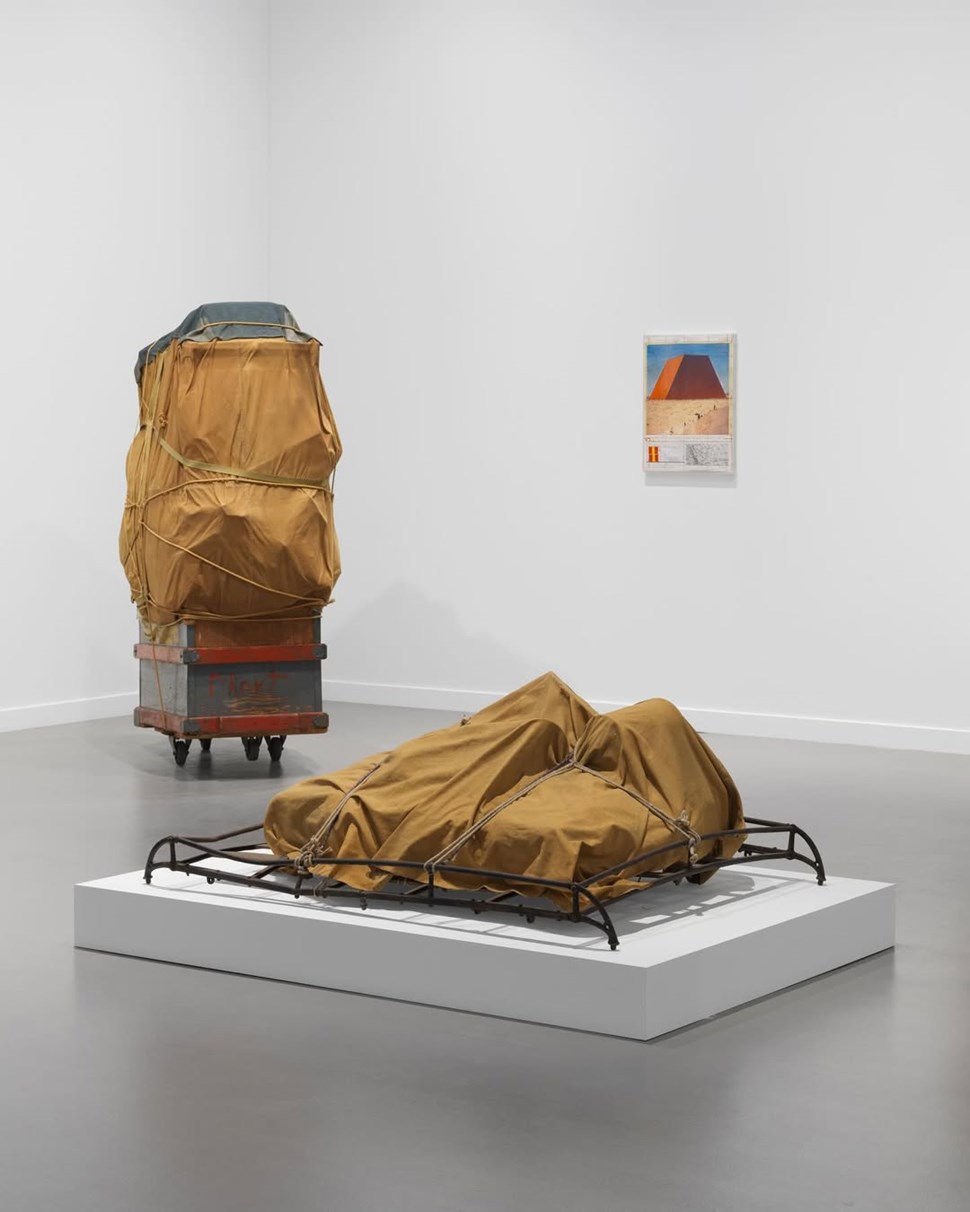
Art Basel Qatar has a different approach—they asked for a number of submissions and selected one presentation. It has made planning easy, which has been refreshing. This week, we are showing sculptural works by Christo from the late 1950s and early ’60s, including notable pieces from his foundational “Package and Wrapped Objects” series. The focus on abstraction feels natural here, given the region’s long history of prioritizing architecture and textiles over fine art.
- Having spent an increasing amount of time in the Middle East, what type of opportunities or developments do you see on the horizon for the region in general or for Gagosian specifically?
Being from the Middle East, I have an affinity for the region. There is an incredible history of artistic creation and collecting, and significant new institutions have been developed over decades rather than centuries, which is remarkable to witness and exciting to follow how it all affects the art ecosystem.
We have and will continue to welcome the opportunity to learn from the Middle East. Our thinking tends to be led by our artists, a number of whom have embraced projects in the region with huge enthusiasm. For example, turning back to Christo and what we are showing in Doha, he visited the Middle East with Jeanne-Claude as early as the 1970s. Back then, they saw significant potential for art projects in the region, including Qatar, Saudi Arabia, and the UAE, and today we see the region engaging with contemporary art in a way that values scale and long-term cultural significance—an approach that aligns well with both Christo’s vision and Gagosian’s way of doing things.
- You’re also an artist. Can you tell us about your work? Does your practice inform or influence how you approach your work at Gagosian?
My art is hard to sum up in a few words, but it relies heavily on my heritage. I always encourage people to see it when they can—I have a show of new work opening at an old friend’s gallery, Jose Martos, on February 19th in New York.
Of course, being able to communicate with artists is an essential part of my job. You don’t have to be an artist to be able to do that, but it certainly helps on the job to have shared experiences. The truth is that everything influences everything. I am always at work—as an artist and for the gallery.

