Loading the archive.
Loading the archive.
Monir Shahroudy Farmanfarmaian - Solo Show
104 days to the ending
3 Oct, 2026 - 28 Feb, 2027
Statement:
The exhibition “Tehran/New York” brings together around one hundred works dating from 1970 to 2015 and shows the breadth of Monir Shahroudy Farmanfarmaian’s artistic practice.
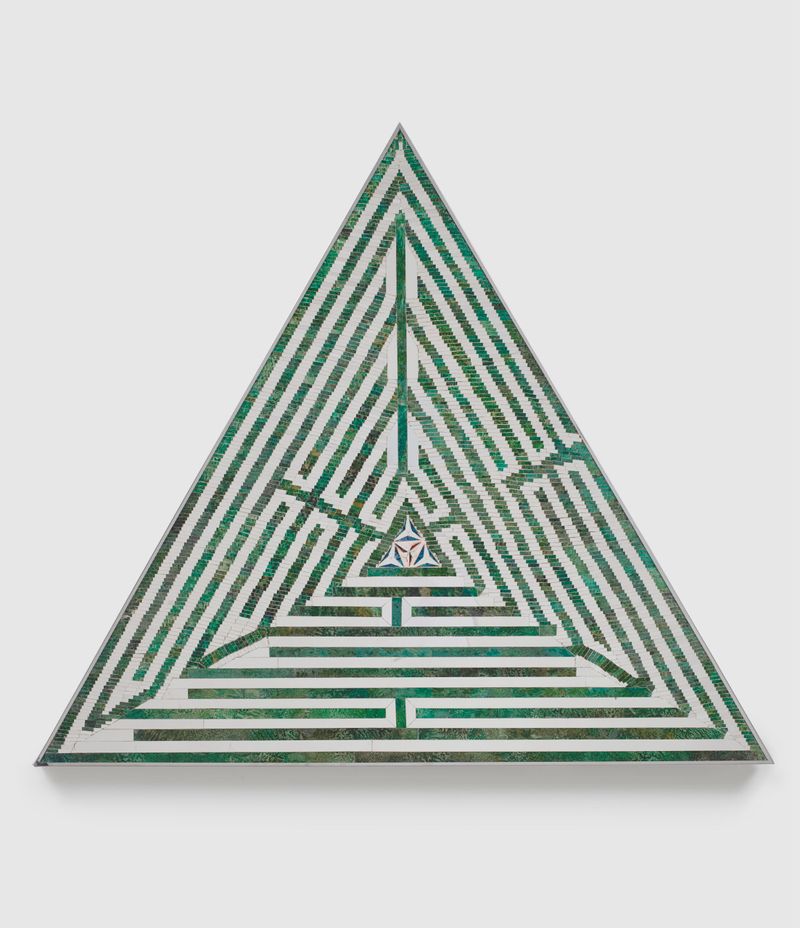
Kaleidoscopic mirror mosaics and sculptural assemblages are shown alongside collages, floral drawings, rugs, calligraphic works and the autobiographical works she called “Heartache Boxes”.
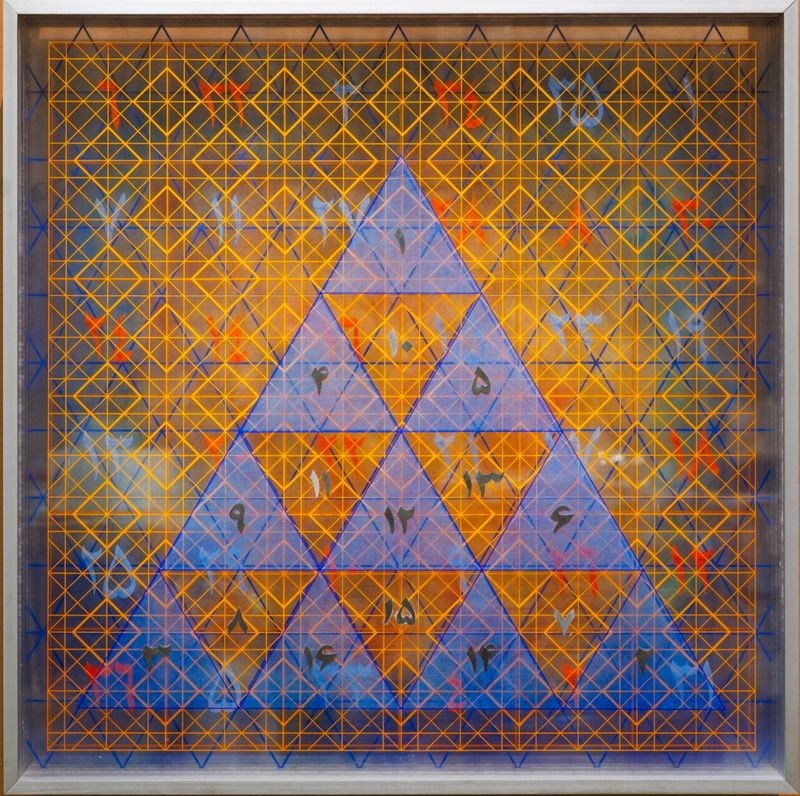
Also on view is “Third Family” (2011), one of her more extensive explorations of geometry and its possibilities for variation.
Taking the hexagon and other basic forms rooted in the traditions of Islamic art as her starting point, she created a wide range of variations. She often worked in series, which she sometimes referred to as “families”, with works linked by affinities of form and structure.
Tehran and New York
Monir Shahroudy Farmanfarmaian’s artistic practice was shaped by her movement between Tehran and New York – two cities that, in different ways, came to influence her life and work.
There, she formed connections within the city’s avant-garde art scene and worked as a designer and illustrator.
When she returned to Tehran in 1957, the city was entering a period of rapid cultural development and became a dynamic and cosmopolitan centre for art during the 1960s and 1970s.
At the same time, Shahroudy Farmanfarmaian deepened her interest in Iran’s visual traditions – from Islamic art and architecture to folk art and crafts – and built up an extensive collection of art and objects.
Her 1966 visit to the Shah Cheragh shrine in Shiraz marked a turning point in her work.
The building’s walls, vaults and domes are covered in ayeneh-kari, a centuries-old Iranian art form in which small pieces of mirror are assembled into geometric patterns.
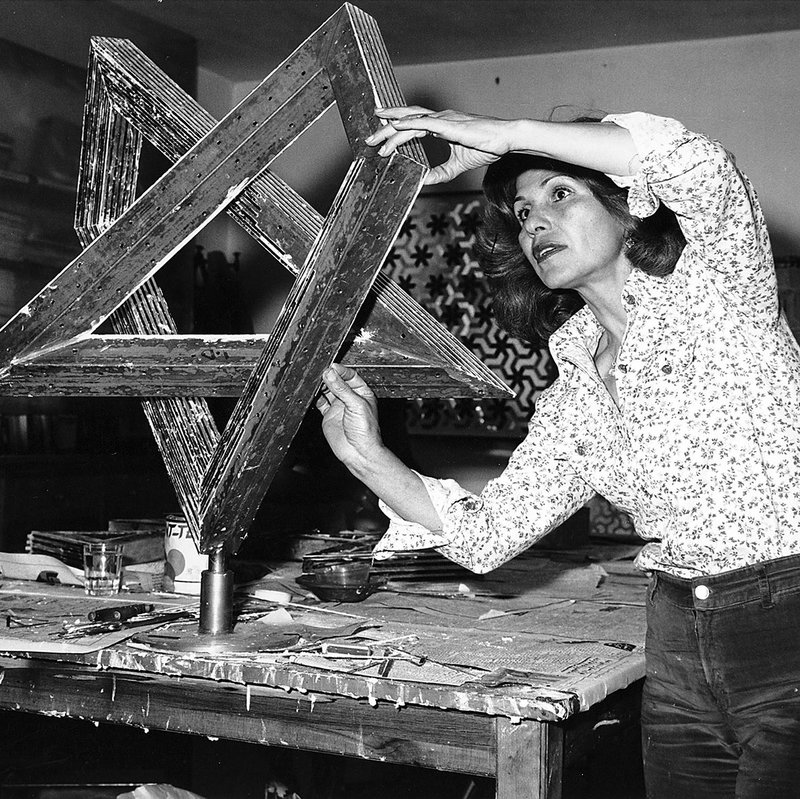
Over time, Shahroudy Farmanfarmaian made mirror mosaic her own, bringing it out of architecture and into reliefs and sculptural art objects.
Exile and return
Following the revolution in Iran in 1979, her life and work faced entirely new circumstances.
Her home and studio, her artworks and much of the collection she had built up were confiscated and dispersed.
She went on to live in exile in New York for twenty-five years.
In New York, she gradually rebuilt her artistic practice through smaller-scale works with materials that were close at hand – paper, pencils, photographs and reproductions.
In collages and drawings from her years in exile, loss and longing intertwine with fragments of Iranian art history and images of her own lost works.
Memory became one material among many.
In 2004, at the age of 82, Shahroudy Farmanfarmaian returned to Tehran.
There, she re-established her studio and resumed working with mirror mosaic alongside craftspeople with specialist expertise.
This marked the beginning of one of the most productive periods of her career, as her mirror works grew in both scale and complexity and ideas developed during her years in exile could finally be realised.
Curator: Asrin Haidari, Moderna Museet