Loading the archive.
Loading the archive.
Group Show
12 Jul - 24 Aug, 2024
Statement:
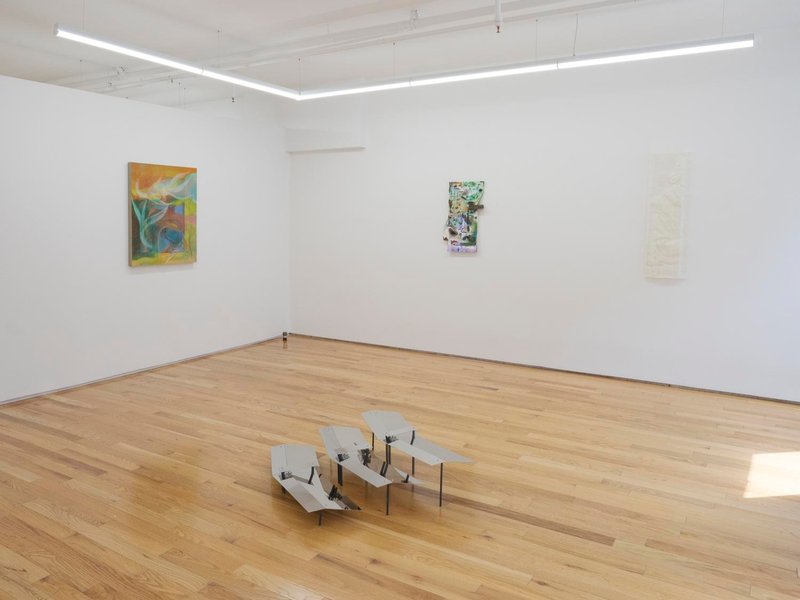
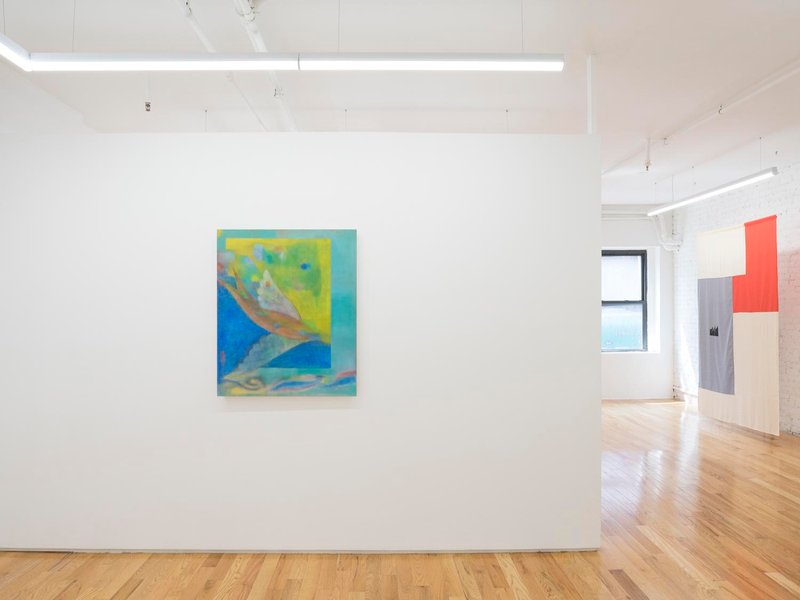
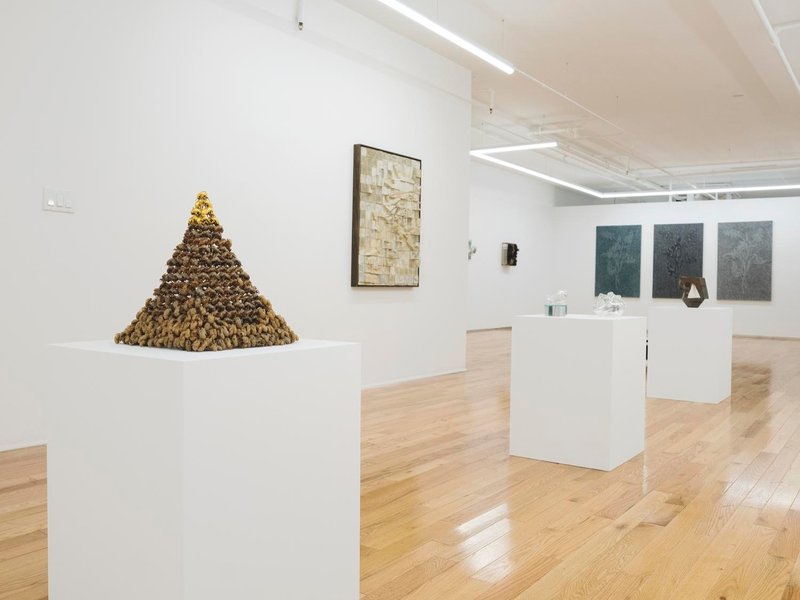
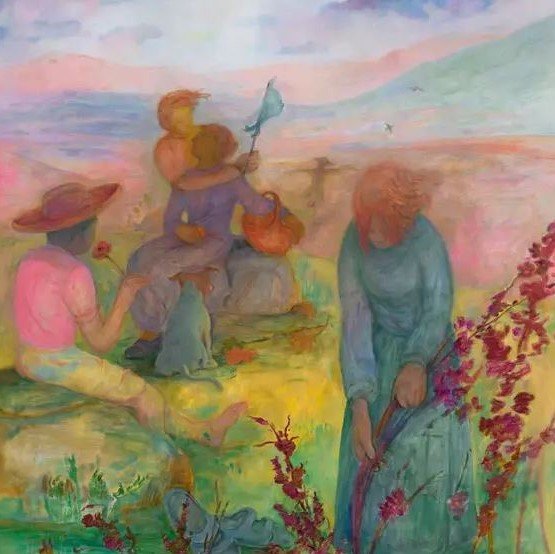
Island Gallery is pleased to present Humilis, a group exhibition tracing the mutability of language and its grounding in the natural world.
The work delves into the intricacies of personal and collective memory-keeping, exploring how these memories can be processed alchemically. Misremembrance intertwines with migratory experiences, presenting ecological facts and fictions, while uncovering power structures deeply rooted in language.
Ancestral histories are dotted with blank spaces, raising questions of nativity: What does it mean to truly belong? How do we delineate a space for ourselves?
This exploration of memory and the land is also found in the work of Naomi Nakazato, who develops a physical type of mercurial boundary-making by printing on natural fibers of seaweed. Each gesture marks a body in motion, restlessly searching for a place to settle and dwell, reflecting the transient nature of belonging.
Their process results in hybrid forms that contemplate the future of threatened communities and ecosystems. This desire to create solidarity is emphasized in Hong-An Truong's multimedia installation.
Truong uses liner notes from a 1973 activist folk album to bring a past revolutionary idealism to the present, evoking a spirit of radical protest through the cooperation of sound and tapestry.
Kragelund's imagery references botanical etchings made in 1772 of flora imported to the British Empire from colonized lands, interrogating formerly accepted false truths. Kaur Alia Ahmed investigates the alchemical process with a group of glass sculptures.
There is transitory nature in the way the material overlaps, wraps, collapses on itself, marks made through rhythmic movement. Light passes through the glass, distorted by the bulbous exteriors.
This gesture of memory preservation extends to Hings Lim’s wall-suspended sculpture, composed of collected biomaterial from hair salons. Lim traces the collective memory of a neighborhood, paying homage to its diverse occupants.
This exploration of boundaries and connections is mirrored in Jordan Loeppky-Kolesnik’s sculptures, which reference hydrological infrastructure. Loeppky-Kolesnik examines forms that divide, block, designate, and impose across large-scale networks of water.
This hidden view of memory and space resonates with Francesse Dolbrice’s development of a taxonomy of signs and symbols. The signs appear in both their drawings and sculptures, containing specific translations in their forms and articulating a personal language known only to the artist.
Artists