

Partou Zia
24 May - 28 Jun, 2025

Statement:
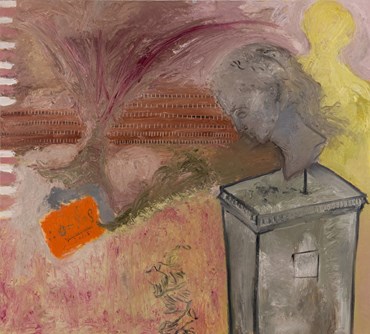
Partou Zia’s last studio in Cornwall was filled with faces. Polished 16th century nobility in the cold style of the Renaissance were shown on postcards, balanced atop rows of finished canvases.
An image of a 2nd century Egyptian female funerary portrait lent against a tray of stones. There were reproductions of light lithograph drawings of embracing couples by Matisse splayed out across her window ledge.///
A small miniature battle scene of tiny people was tucked in an area next to a box of books and child’s bike. Close by was a handwritten note. In thick black pen it read, “How Do I Know about the World? By What is Within Me”.
Zia’s search for meaning, a protracted quest, had led her to self-portraiture. It took time for her to build up to the biographical works that hang here at Indigo+Madder.
A residency awarded to her at Tate St Ives between 2003-04 was one catalysing fact, the other was her cancer diagnosis that would sadly take her life, far too early, in 2008. Whereas before, landscape and snippets of interiors had dominated her paintings, now, she was central.
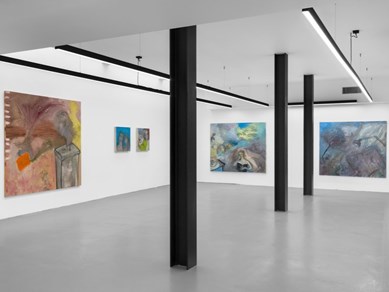
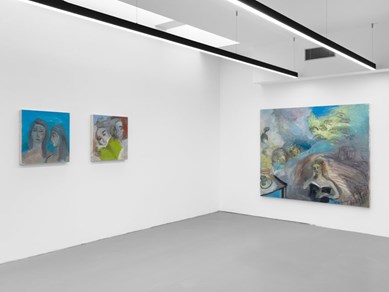
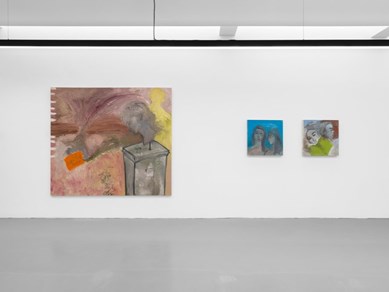
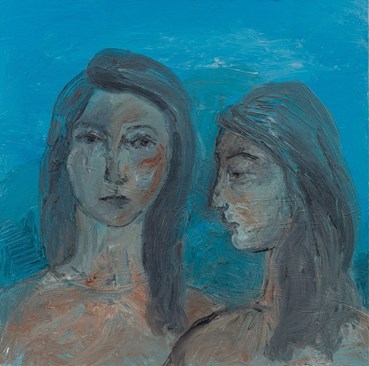
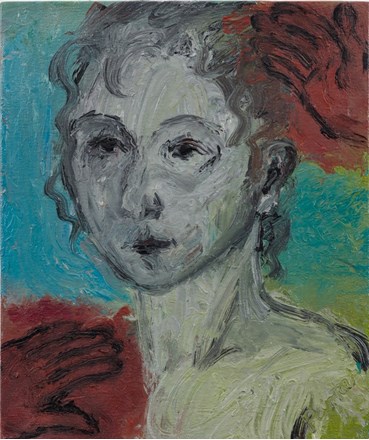
As if shaped by all the visual sources she absorbed, she showed herself almost sculpturally with a stony, steely visage. Whether she is shown enveloped in mists of cool blue, as in In accord, or among trees, in Writing in the Forest, 2006, Zia placed herself on the cusp of worlds, here and elsewhere.
The figure, whilst resembling Zia and often drawn from her mirror reflection, is equally different and a creative fabrication. “The one-that-is-not I” as she had said.
Zia was fascinated by the idea of transcendental expression and dedicated her PhD thesis to explicating what she deemed a “poetic zone”; the creative moment at which she found her spiritual world exceeded her conscious awareness.
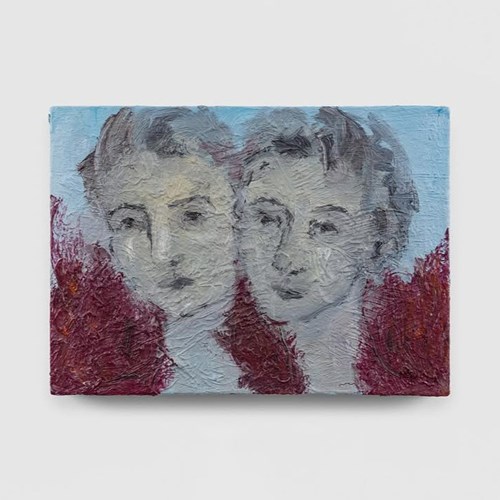
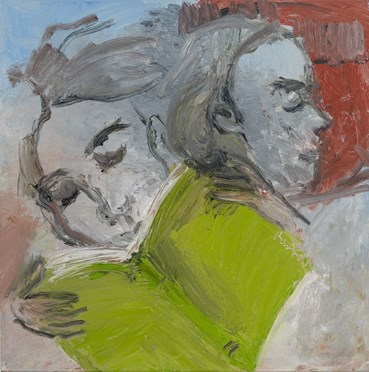
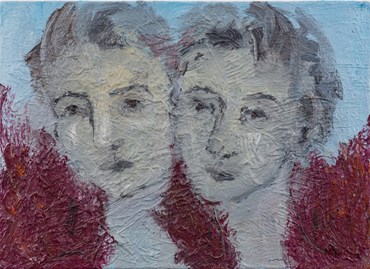
Zia seemed insistent on getting beyond herself and also artistic genres. You can see this desire in her many double portraits and the varied images and literature she consulted as well as the books she published.
Indeed, look at her oeuvre and it is rare that a book is not painted into her scenes. They are found stacked into unstable towers, as a prop or open and being read and also written.
Zia had, as Virginia Button wrote, a “searching intellect”. She was informed by thinkers from everywhere and every time. The words of modern poets, psychoanalysts, ancient sages and feminists, among them, were crucial and folded themselves into her polyvalent view.
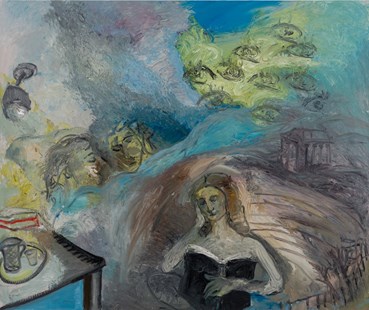
You can see her unbound curiosity in Night time dreaming, where the background seems liquid and there is no border of boundary between person, place or possession. Zia shows a freewheeling world where voluminous bed linen cascades into landscape and ancient Greek architecture is nestled beneath a canopy of eyes.
The paint strokes are harried and soothing. Parts of the canvas smoothly spiral into each other with the lashings of paint suggesting a layer of activity beneath.
In the scrawl of her hair a sub scene seems brewing. The ability to see and feel more and further into these works is intentional, for as Zia said, “It is not form I want, but the essence of a memory; the sound of a feeling; the taste of a loss.”
Dr Cleo Roberts-Komireddi
In this show
Partou Zia
Partou Zia
Partou Zia
Partou Zia
Partou Zia
Partou Zia
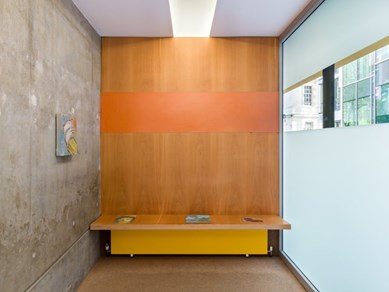
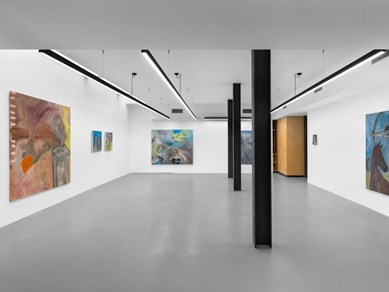
Installation view