Fatak Mousavi was born in 1982. He has graduated in Sculpture from the University of Arts, Tehran. In addition to art he is a professional climber, and after completing various courses, he obtained a "Route Setting" Diploma in France in 2013. His presence in the first conceptual art exhibition in 2001 was welcomed by the officials of the Tehran Museum of Contemporary Art. The museum purchased his work and has been installed it in the main building of the Ministry of Culture and Islamic Guidance. "Who is afraid of Iranian art pioneers?" This was a critique written by Dr. Alireza Sami Azar, published in newspapers in 2009 regarding the artist's exhibition named "Sepid." In his critique, he states: " The Sepid " exhibition has shown the struggle against the pioneers of modern Iranian art in a rare and strange event. The young artist "Fatak Mousavi "has harmonized creative work quality with his aggressive approach in this icon-breaking exhibition in each of the master's works. ///
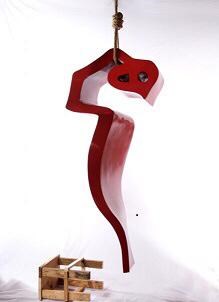
Aghdashloo's Classical Persian and Western characters are torn to pieces, Ehsayi's calligraphies were shredded to tiny strings of papers, and the strings have been destroyed, Tanavoli's controversial "Heech" has been hanged or burned, Kiarostami's famous trees installations and photographs have been burned or sawed, and finally, Nami's paintings with white background had been blown up and destroyed. What is the real purpose of this destruction, and what is the motivation for displaying this anti-art behavior? ... In the Iranian art community and especially in the young generation and newly recognized artists, significant changes are emerging, which can be interpreted in the background of the educated Iranian society modernization movement and pro- guess..." .///
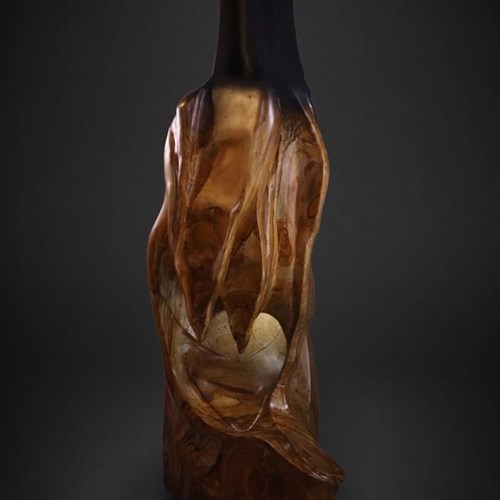
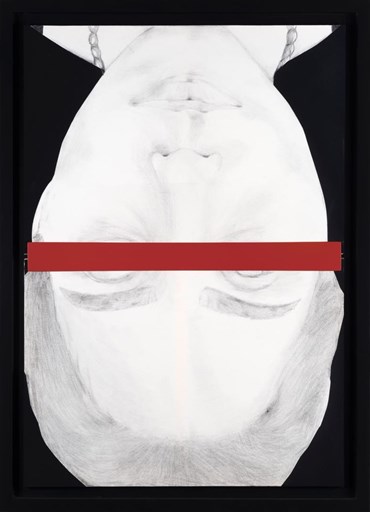
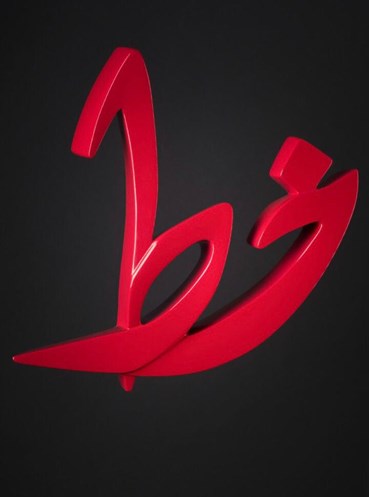
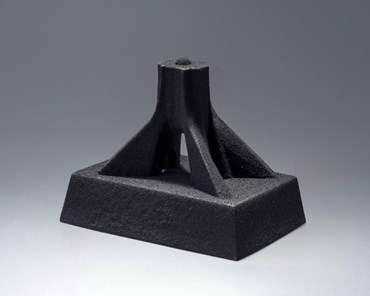
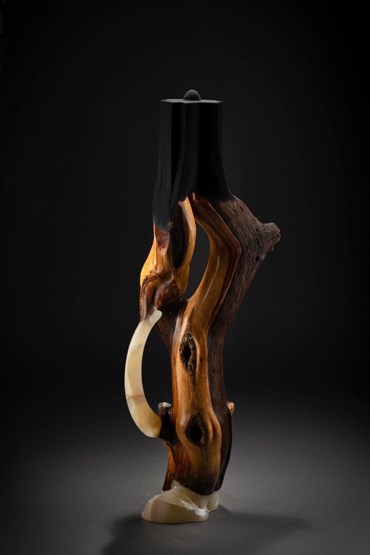
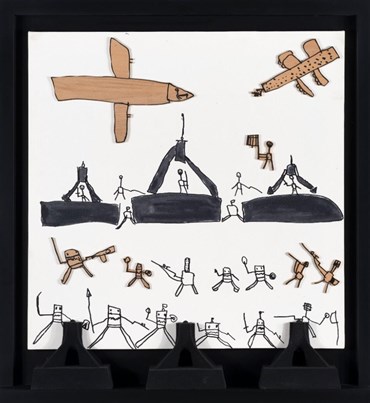
The exhibition "Black-Red-White" results from three years of artist's work in the form of a Conceptual Art Installation. Works in the form of sculptures and paintings displayed in a space covered with salt. The works are based on different views of the "Azadi Square" building and various writings of "Khat Ghermez" in sculptures produced from combinations of stone, wood, and epoxy glass. The artist says about his exhibition: "This arrangement is the result of a post-minimalist approach, relying on elements such as materialism, repetition and the use of flat and industrial colors in expressing the artist's conceptual point of view."