




Tehran Art Month, Mapping a Cultural Ecosystem
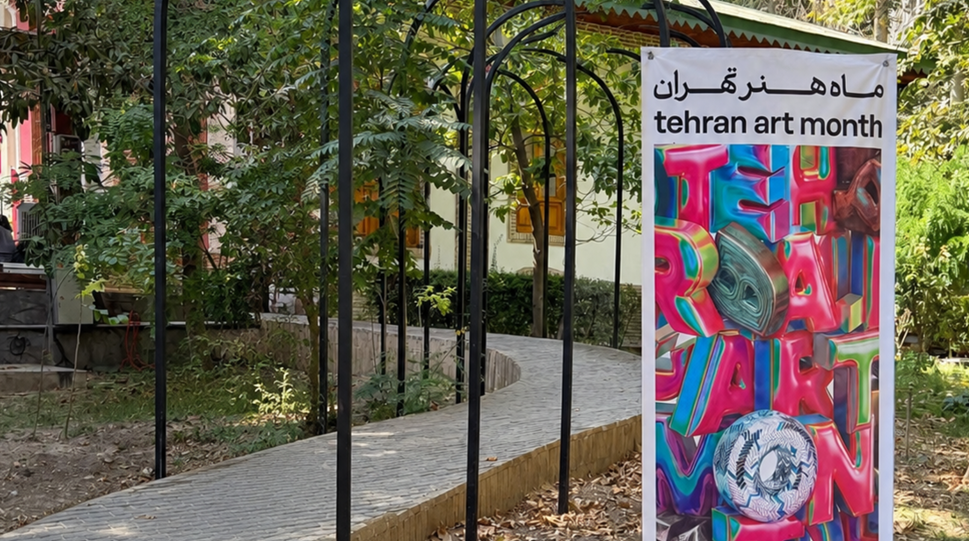
3 hour agoFrom 21 August to 11 September 2026, the first edition of Tehran Art Month brought together galleries, museums, artists’ studios, independent initiatives, cultural centers, cafés, publishers, art associations, and other spaces across Tehran. Organized under the framework of Tehran Art Fair, the event unfolded across more than one hundred locations rather than being concentrated within a single exhibition hall or institutional venue. Its opening took place at the Iranian Artists Forum, but the larger proposition of Tehran Art Month was deliberately dispersed, the city itself was intended to become the framework through which the event could be encountered.
This dispersed structure was important to the way Tehran Art Month defined itself. Instead of asking participating organizations to temporarily relocate to a central site, it connected programs already taking place within different parts of Tehran and placed them under a shared framework. Museums and established commercial galleries appeared alongside independent art initiatives, cultural cafés, artists’ studios, publishers, associations, and other forms of artistic organization. The original call for participation explicitly addressed this broad range of spaces, describing the event as an attempt to create a living cultural ecosystem in which audiences would be encouraged to move, discover, encounter, and engage with art throughout the city.
The idea of an ecosystem is particularly useful in thinking about what Tehran Art Month attempted to do. Tehran already contains a dense network of cultural activity, but much of that activity is experienced separately, one visits an exhibition at a gallery, attends a discussion at a museum, encounters a publishing project elsewhere, or enters an artist’s studio through an independent program. Tehran Art Month did not create these spaces. Instead, it attempted to make the relationships between them more visible.
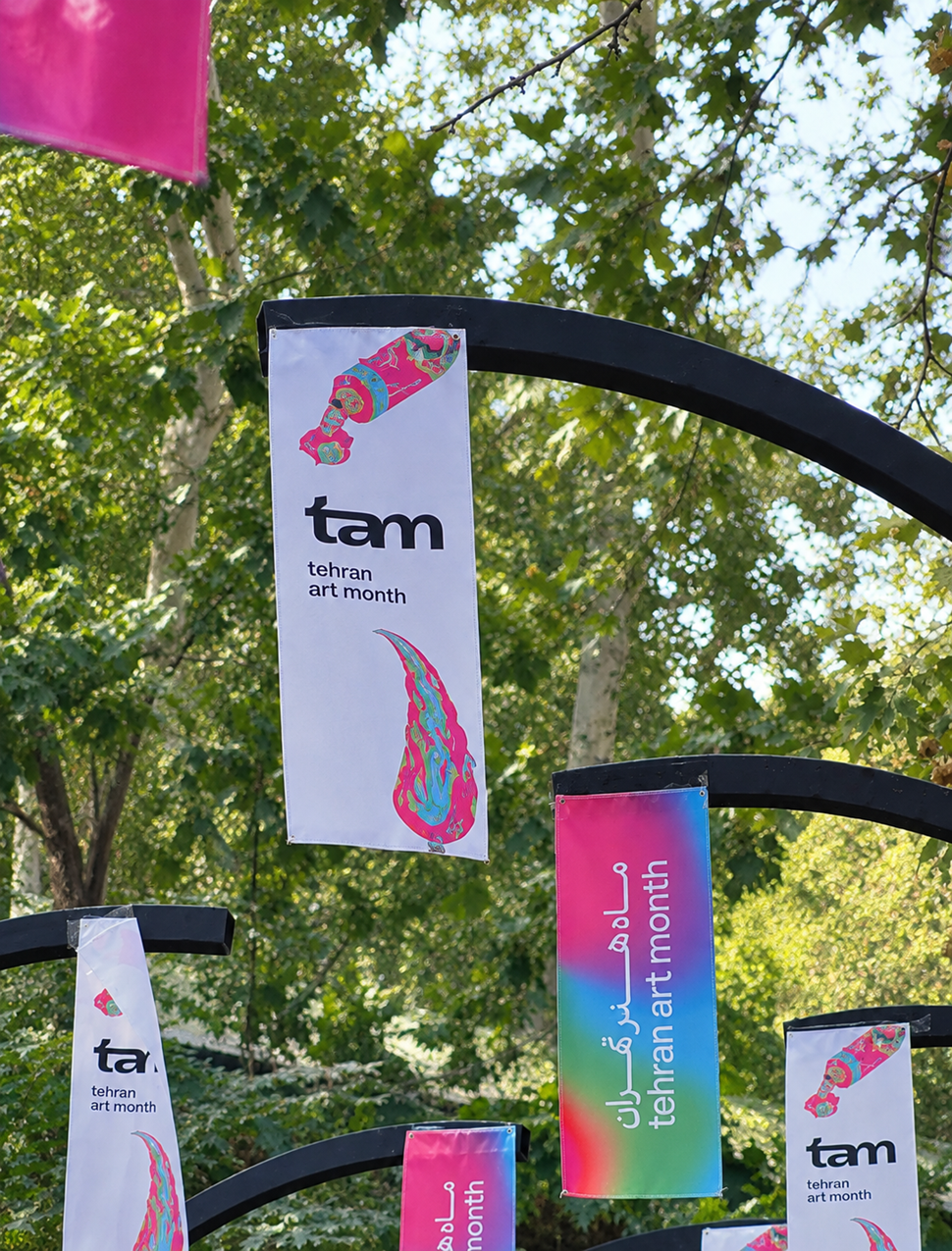
In this sense, the event can be understood less as the creation of a new cultural center than as a temporary mapping of an existing cultural landscape. What had previously appeared as separate exhibitions and programs could, for several weeks, be read as parts of a larger field. A gallery was no longer presented only through its own program, it also became one point within a wider network of institutions, independent projects, artists, publishers, and audiences. The city consequently became more than the physical background of the event. Movement through Tehran, from one exhibition or program to another, became part of the experience itself.
This approach also distinguished Tehran Art Month from the centralized logic of an art fair. An art fair generally brings galleries and artworks together within a single location, reducing geographical distance in order to intensify viewing, exchange, and, importantly, the commercial circulation of art. Tehran Art Month worked in almost the opposite direction. The audience had to move outward into the city. Rather than temporarily removing galleries from their usual contexts, the event emphasized those contexts, asking visitors to enter spaces with different histories, identities, communities, and relationships to their surrounding neighborhoods.
The organizers described one of the central ambitions of the project as reducing the distance between contemporary visual art and audiences who may not normally feel comfortable entering galleries. Asieh Mazinani, the event’s artistic deputy, pointed specifically to the social codes that can surround art spaces, for some potential visitors, even questions as basic as how one enters a gallery or how one is expected to behave there can create a sense that visual art belongs to a specialized community. Tehran Art Month therefore incorporated cultural spaces that might already feel more familiar to a broader public, while also including artists and independent projects that do not necessarily fit easily within conventional gallery structures.
One of the clearest examples of this attempt to reconsider the relationship between artist, artwork, and audience was the inclusion of open studios. Instead of encountering only completed artworks installed for exhibition, visitors were given access to spaces of artistic production, tools, working processes, unfinished pieces, and the environment in which an artist develops a practice. This seemingly simple shift changes the nature of spectatorship. The artist is no longer encountered only through the polished and isolated object presented on a gallery wall, the conditions of making also enter the experience. The organizers presented these programs as a way of reducing some of the distance between artists and their audiences.
Exhibitions nevertheless remained at the core of the event. Across Tehran, group and solo exhibitions operated simultaneously within its framework. These included Ṣ/L/B, a group exhibition curated by Mehrdad Afsari at Artibition Gallery, and Mostafa Mohseni’s solo exhibition Memory of Light at Shamis Gallery, both running from 21 August to 11 September. Elsewhere, exhibitions were organized by individual galleries and artistic associations, including projects dedicated to specific media and material practices. The result was not a single curatorial thesis imposed on every participating exhibition, but a collection of distinct programs connected through time, geography, and the broader identity of Tehran Art Month.
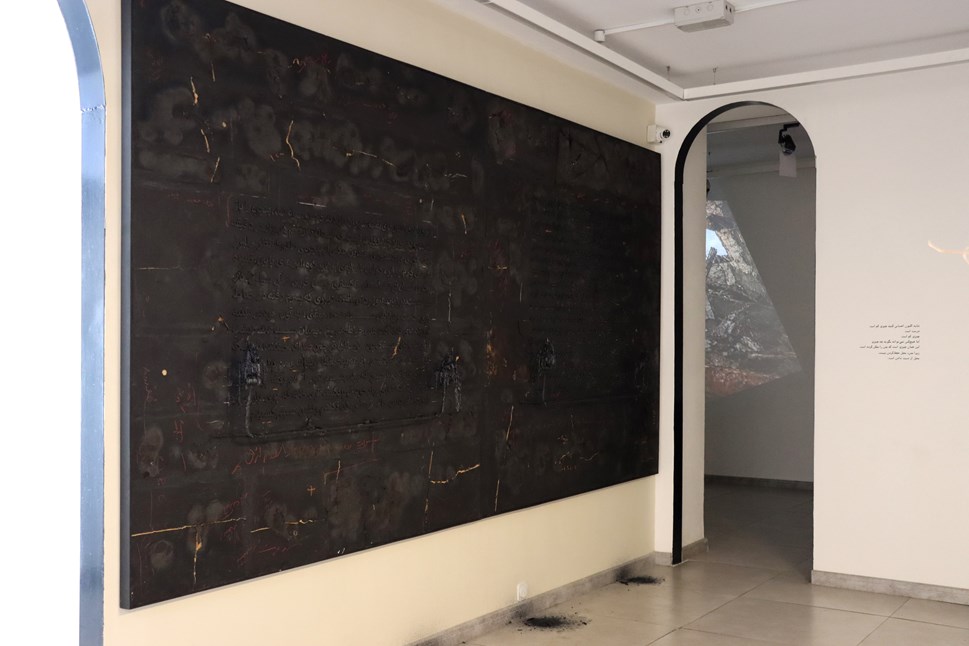
The program also extended substantially beyond exhibitions. Talks, workshops, research focused events, book related programs, artist conversations, and interdisciplinary discussions placed questions surrounding artistic production alongside the presentation of artworks themselves. At the Tehran Museum of Contemporary Art, for instance, discussions addressed subjects such as art education, the relationship between the artist and activism, and the politics of art in public space. A discussion titled Tehran, a City Without Art brought together perspectives from anthropology, architecture, gallery practice, and sculpture to consider the relationship between contemporary Tehran, urban identity, and public art.
The Art Month book program similarly created a space for discussing the structures through which artistic knowledge is produced and circulated. Sessions considered subjects including the condition of art criticism and the relationship between translation and original writing in Iranian visual culture. One discussion asked directly where criticism stands within the contemporary art field, opening questions around the relationship of criticism to galleries, universities, markets, media, and social networks. In this respect, Tehran Art Month did not exclusively present art as a collection of objects to be viewed, parts of its program attempted to make the structures surrounding artistic production themselves available for discussion.
There is, however, an important difference between distributing an art event across a city and making art genuinely public. The two should not automatically be understood as the same thing. A network of more than one hundred participating locations may expand the geographical presence of an event, but accessibility also depends on who already knows that these spaces exist, who feels invited to enter them, and how easily audiences can move between them. The gallery can remain socially unfamiliar even when it becomes one point on a citywide map.
This tension is particularly significant because Tehran Art Month repeatedly positioned accessibility as one of its central concerns. Its slogan, For the people, for the city, for art, placed the public at the center of the event’s identity. But the question of publicness cannot be answered simply through scale. The more productive question is what kinds of encounters become possible when spaces that normally operate independently recognize themselves, even temporarily, as part of a shared cultural infrastructure.
Seen from this perspective, one of the most interesting aspects of Tehran Art Month was not necessarily its size, but the relations it attempted to make visible. An established museum and a small independent project do not possess the same institutional power, financial resources, audiences, or cultural visibility. Nor do a commercial gallery, an artist run space, a café, a publisher, and an artist’s studio perform the same function. To place them within the same network does not eliminate these differences. Instead, at its most productive, such a structure can make those differences visible while showing how each contributes differently to the production of a cultural field.
Questions of economy inevitably enter this discussion as well. During a public conversation about the event, Tehran Art Month director Hossein Mohseni addressed the difficult economic conditions facing artists and galleries, including the challenges of maintaining studios, sustaining gallery programs, and selling artworks in a strained economic environment. The organizers also positioned private cultural organizations as potentially important actors in supporting artistic production when other forms of cultural infrastructure remain insufficient.
This complicates the idea of bringing art closer to the people. Art is simultaneously a cultural practice, a field of intellectual production, and an economic system. Galleries support artists but also participate in a market, museums construct cultural narratives while operating within institutional structures, independent spaces may offer alternatives while facing questions of sustainability. Tehran Art Month brought many of these different actors together, and in doing so it also made visible some of the contradictions within the contemporary art ecosystem itself.
For this reason, perhaps the most valuable way to evaluate the first Tehran Art Month is not by asking whether every exhibition belonged together aesthetically. They did not need to. Nor is its importance necessarily found in the sheer number of programs taking place simultaneously. The more interesting proposition lies in the act of temporarily placing different parts of Tehran’s cultural infrastructure into relation with one another.
At the same time, such a model risks becoming primarily an umbrella, a common title placed over activities that might have happened independently regardless of the event. This is the challenge that follows any citywide cultural initiative. Visibility and coordination can certainly strengthen a cultural field, but a shared calendar is not automatically a shared network. The distinction depends on whether relationships are created between institutions, artists, independent initiatives, publishers, critics, and audiences that continue after the event itself has ended.
The first edition of Tehran Art Month should therefore perhaps be understood as a proposition rather than a conclusion. For twenty two days, it offered a particular way of looking at Tehran, not simply as a city containing galleries and museums, but as a cultural geography made up of numerous connected and disconnected points of artistic production. It asked audiences to move through that geography and, in doing so, to recognize the cultural infrastructure that already exists around them.
Whether Tehran Art Month develops into an enduring platform will depend on what happens between editions. Its longer term significance will lie not only in increasing the number of exhibitions or participating venues, but in whether the temporary connections created through the event can become lasting forms of exchange, collaboration, accessibility, and critical dialogue.
What the first edition demonstrated most clearly is that Tehran’s contemporary art scene cannot be located in any single institution, neighborhood, gallery, or exhibition. It exists through a network, sometimes visible, sometimes fragmented, sometimes commercial, sometimes independent, and often operating through overlapping relationships. Tehran Art Month’s most compelling gesture was to place a frame around that network, not in order to resolve its contradictions, but to allow the city, briefly, to see it as a whole.
Sources:
- www.galleryinfo.ir
- www.irna.ir
- www.isna.ir
- www.mehrnews.com
Cover & Slider:
- www.tehranartfair.com

 News-Iranian artists participating in Alserkal Art Week
 Review-A Review on the Basel art week 2025 and presented Iranian artworks
 News"-A Review on Berlin Art Week"
