






Darz In Memoriam: A Tribute to Marjane Satrapi
06 Jun 2026Marjane Satrapi, the Iranian-French writer, illustrator, and filmmaker, passed away on June 4, 2026, in Paris. She was 56.
Satrapi was one of the most influential figures in contemporary graphic literature and cinema, an artist who transformed personal memory into a universal visual language. Through intimate yet sharply observant storytelling, she brought the lived experience of Iranians into global cultural discourse. She was best known for her autobiographical graphic novel Persepolis, first published in 2000, which became a landmark work in contemporary literature and fundamentally reshaped how graphic narratives could engage with history, identity, exile, and memory.
Born in Rasht in 1969 and raised in Tehran, Satrapi left Iran as a teenager and later settled in France, where she developed a multidisciplinary career spanning illustration, writing, and filmmaking. Persepolis, recounting her childhood and adolescence during the years of revolution and war in Iran, quickly gained international acclaim. Its animated adaptation, co-directed by Satrapi, premiered at the Cannes Film Festival in 2007, received the Jury Prize, and was later nominated for an Academy Award.
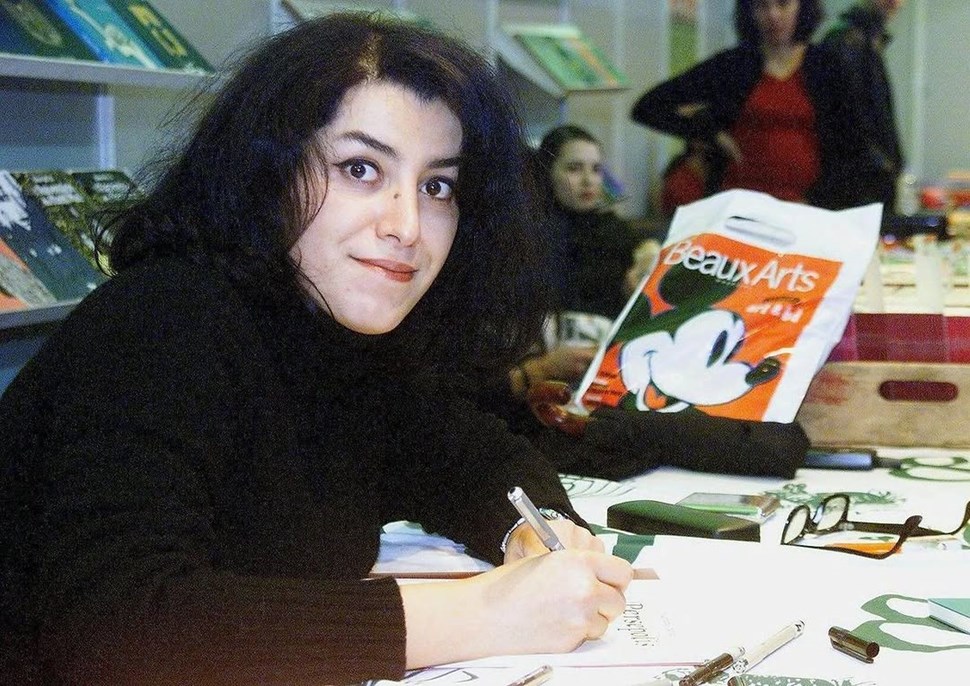
Her later works, including Embroideries and Chicken with Plums, continued to explore themes of family, loss, intimacy, and cultural memory through a distinctive balance of humor and emotional depth. Beyond graphic novels, Satrapi remained active in cinema as a director, screenwriter, and visual artist, expanding her practice across different forms of storytelling.
What distinguished Satrapi’s work was her ability to turn deeply personal experiences into narratives with universal resonance. Her minimal yet expressive visual language, combined with direct and emotionally precise storytelling, allowed readers across cultures to connect with her work. For many audiences around the world, Persepolis became a defining introduction to graphic literature as a serious artistic and literary medium.
News of her passing prompted widespread responses from artists, writers, filmmakers, and cultural institutions internationally. The Cannes Film Festival described her as an artist who “built a bridge between her homeland and her land of exile.” Others reflected on her lasting influence on contemporary comics, auteur animation, and autobiographical storytelling.
Marjane Satrapi leaves behind a body of work that transformed visual storytelling into a space for memory, witness, and human experience. Through her books and films, her voice and vision will continue to rnate across generations.
Cover and Slider Image:
- Mubi France Instagram

04 May 2026
Darz In Memoriam: A Tribute to Mahmoudreza Bahmanpour